
The Senate handed President Donald Trump a rare bipartisan win Monday, overwhelmingly approving a sweeping housing bill that aims to cut red tape, boost construction and blunt one of the biggest cost-of-living headaches facing voters ahead of the midterms.
After the 85-5 Senate vote, the 21st Century ROAD to Housing Act moved one chamber away from Trump’s desk.
The president is expected to sign it, potentially as soon as Wednesday, after urging Congress to finish the long-sought affordability push.
The vote marked Congress’s most significant attempt in decades to tackle housing regulations, with lawmakers from both parties trying to show voters they can still agree on one of the country’s most stubborn economic problems.
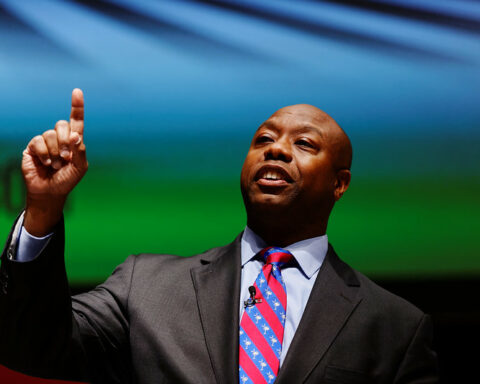
Sen. Tim Scott of South Carolina and Sen. Elizabeth Warren of Massachusetts became the Senate faces of the package, while House Financial Services Committee Chairman Rep. French Hill of Arkansas and Rep. Maxine Waters of California carried the parallel push in the House.
Scott framed the issue as a generational crisis, arguing that young Americans are delaying major life decisions because homeownership feels out of reach.
“They’re delaying marriage, they’re delaying having kids, they’re delaying putting down roots. Not because they lack ambition but because housing prices are too darn high and housing supply too low,” he noted.
The South Carolina Republican urged lawmakers to finish the job quickly.
🗳️Turning Point PAC is deploying the largest ballot-chasing operation in U.S. History to secure key battleground states. 🗳️ Keep our grassroots army in the field and protect future victories! ➡️➡️➡️ DONATE TODAY!!! 🇺🇸🇺🇸🇺🇸
“Now it is time to move forward, get this bill across the finish line, and deliver real relief for the American people,” Scott said.
Warren, who has spent years warning about housing costs and corporate ownership, used the vote to argue that bipartisan dealmaking can still produce legislation with real bite.
“Today’s vote proves that it is possible to find bipartisan, common ground on legislation that actually helps the American people,” Warren said on the floor before the vote.
“And, importantly, it proves that bipartisan legislation doesn’t have to be the weakest, most milquetoast agreement that doesn’t offend anyone or do too much to help anyone either.”
But she also warned that the measure would not solve the crisis alone.
“And I just want us all to remember – this housing bill is big. But our housing crisis is even bigger,” she pointed out.
“We have more work to do. And I hope that today’s vote is only the first of many votes to follow to continue our efforts to lower the cost of housing all across America,” Warren added.
Warren also stressed that the bill was not an attempt by Washington to steamroll local governments.
The Massachusetts Democrat described it as a package of federal changes that could make existing housing programs work better over time.
“This is a housing package that will help increase supply and bring down costs,” Warren explained.
“One way is by beating back private equity, so they won’t invade your neighborhood, buy up all the houses, and turn America into a nation of renters.”
Nearly 60 separate housing ideas were folded into the final package.
The Senate Banking, Housing and Urban Affairs Committee pitched the measure as a way to speed construction by cutting review delays, updating zoning tools and reducing regulatory friction.
Other pieces reach into multifamily lending, HOME program rules and how much banks can invest in affordable housing.
The bill would also let communities steer as much as one-fifth of CDBG money into new affordable housing construction.
Sen. Bernie Moreno of Ohio also secured language creating pre-approved housing designs meant to speed up homebuilding.
Moreno framed the provision as a message to local governments that housing prices cannot come down if builders are buried under costly delays.
The legislation, he said, “sends a signal to state and local communities, to say, ‘Hey, guys, you really have to drive down the cost of housing, and you do that by not torturing homebuilders.’”
One of the fiercest fights centered on private equity and corporate ownership of single-family homes.
Senate Republicans had wanted a tougher corporate-buyer crackdown, matching the direction Trump set in a January executive order.
House Republicans pushed to narrow that approach, and the final version landed on a compromise.
Under the final language, the cutoff falls on companies with more than 350 single-family homes already in their portfolios.
Lawmakers also struck a deal on disaster-recovery grants. The Senate side wanted the disaster-recovery grant program kept alive indefinitely, while the House side preferred an endpoint. The compromise gives the program a three-year runway.
Sen. Josh Hawley of Missouri said Monday that anything aimed at lowering prices was worth supporting.
“We should do a lot more things to bring down the costs of other items, like gas, like healthcare. You know? I mean, like everything we can get our hands on,” he remarked.
Hill called the final product a “meaningful step” and praised the Senate for accepting major House priorities.
“Bipartisan, bicameral legislating is never easy – but progress matters. I appreciate the Senate including a three-year sunset on the CDBG-DR program and adopting key House priorities including 9 community banking bills and the House’s language limiting institutional investors from outcompeting American families in the housing market,” Hill stated.
“This bill is a meaningful step toward increasing housing supply, improving affordability, and helping more Americans achieve homeownership. I look forward to President Trump signing it into law.”
The broad vote did not erase conservative objections over federal reach and limits on buyers.
Sens. Rick Scott of Florida, Ron Johnson of Wisconsin, Tommy Tuberville of Alabama, Rand Paul of Kentucky and Mike Lee of Utah voted against it.
The bill had been bouncing between chambers since the Senate’s March version and the House’s May rewrite.
Last week’s committee-level deal between the two chambers finally set up Monday’s Senate action.
House leaders prepared to use the suspension calendar, a faster route that shortens debate but demands two-thirds support.
Final House action could come as early as Tuesday, putting a Trump signing ceremony within reach soon after.