The Trump Justice Department is abandoning its controversial “Anti-Weaponization Fund” after a federal judge blocked the nearly $1.8 billion proposal and Senate Republicans warned it could derail a major border-security funding package.
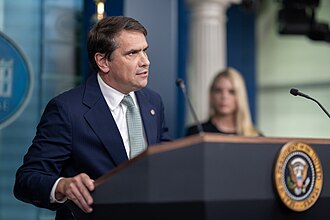
Acting Attorney General Todd Blanche told lawmakers Tuesday that the department would not move forward with the fund, which had been created through a settlement between President Donald Trump and the IRS over the disclosure of his tax returns.
“We are not moving forward with the fund, period,” Blanche testified during a House Appropriations Committee hearing.
He still defended the idea behind it. “The reasons for the fund are something that President Trump has talked about for a long time, which is the fact that there were a lot of people in this country who had their government weaponized against them,” Blanche said.
“The reasons for the fund, I think, remain as important as they were before, but, we are not moving forward with the fund.”
The announcement came after the Justice Department said Monday it would comply with a temporary court order blocking the program.
The DOJ defended the fund as a way to compensate people who were targeted by government weaponization, saying it was meant “to make up for the tremendous abuse, harm, and hate unfairly shown to so many people.”
The department said the fund would be “open to anybody who was so weaponized, targeted, or persecuted, whether they were Democrat, Republican, Conservative, Independent, or otherwise.”
But the plan drew bipartisan fire almost immediately. Critics called it a “slush fund” that could benefit Trump and his supporters, while three separate lawsuits were filed challenging the program.
U.S. District Judge Leonie Brinkema issued a temporary injunction on May 29, halting implementation while the court reviewed one of the cases.
A hearing on the fund’s legal basis had been scheduled for June 12. Blanche said that hearing would no longer take place because the Justice Department was dropping the plan.
The settlement did not call for Trump to receive direct compensation. Instead, it created a $1.776 billion fund to be paid out through the federal Judgment Fund, which is used for government settlements.
A five-member board appointed by Blanche would have determined who received distributions.
Blanche told lawmakers that no work had begun to establish the fund because litigation was still underway.
Democrats pressed him to formalize the promise. Rep. Grace Meng of New York, the top Democrat on the House Appropriations subcommittee, asked Blanche whether he would commit to putting the decision in writing.
“I’m just concerned because you’re not under oath. And I want to trust you — and I want to believe you, we all do — but putting it in writing would settle that issue,” Meng said.
Blanche refused. “I’m not committing to putting anything in writing,” he answered. “I don’t know what the purpose is of putting something in writing. I’m telling you what we are doing.”
The Trump-IRS settlement also included a separate provision permanently barring the IRS from auditing Trump, his family or his business, according to the source text.
Rep. Rosa DeLauro of Connecticut asked Blanche if that portion of the settlement would remain.
Blanche said the Justice Department would not enforce only the fund portion of the settlement and that the rest of the agreement remained in place.
“It’s not immunity,” Blanche said, noting that resolving past audits is typical in IRS settlements.
“It’s not a forward-looking document,” he added. “It’s nothing that gives any sort of immunity in the future to the president or his family or his organizations.”
The fund had also become a major problem in the Senate.
Senate Majority Leader John Thune said Monday that his preference was for the administration to shut down the proposal so Congress could move ahead with a budget reconciliation package funding Immigration and Customs Enforcement and Border Patrol through 2029.
“I made my views very clear on the issue,” Thune stted. Asked if he wanted the administration to abandon the fund, Thune nodded yes.
“I do think the best way to handle it is if the administration decides to shut it down themselves,” he continued.
A roughly $72 billion budget reconciliation measure hit resistance ahead of the Memorial Day break, as several Republican senators hesitated to advance it while questions about the fund remained unresolved.
Thune said he had spoken with White House officials and urged a narrower bill focused on border and immigration enforcement.
“The best way to get the reconciliation bill moving and across the finish line is to confine it to the issues that we were addressing in the initial bill, which was [Customs and Border Protection] and ICE and funding it for the next three years, through the end of the Trump administration,” Thune pointed out.
He argued that if the administration made clear the fund was dead, Republicans could fend off Democratic amendments tied to the issue.
“If the administration effectively shuts it down, makes that very, very clear, then that to me should answer the question,” he said.
Thune also said a bill without White House ballroom funding and without anti-weaponization-related amendments had a stronger chance of reaching Trump’s desk.
“I think the House, if it’s confined to the issues that we addressed in the budget resolution, then I feel good about the House moving it,” he remarked.
“The best way … to get it done, is to get back to where we were originally and that was a targeted, clean, focused, narrow bill that addresses specifically those homeland security issues and through the end of the administration.”
Senate GOP leadership signaled that the preferred resolution would be a definitive commitment from the administration that the fund will not be resurrected once the reconciliation measure is enacted, describing that scenario as the most favorable path forward.
Senate Democratic Leader Chuck Schumer had also vowed Monday to force a vote killing the fund permanently.
“Senate Democrats will push legislation to ban Trump’s corrupt MAGA slush fund and ensure that no president can ever do this again,” Schumer posted on X. “We will make sure that it’s dead and can’t be revived—just like we did with Trump’s ballroom.”
Senate Democrats will push legislation to ban Trump's corrupt MAGA slush fund and ensure that no president can ever do this again.
We will make sure that it's dead and can't be revived—just like we did with Trump's ballroom. pic.twitter.com/BikRpjPO8t
— Chuck Schumer (@SenSchumer) June 1, 2026
“The only way to stop Trump’s nearly $2 billion MAGA slush fund and his blank check to commit tax fraud is to abolish it by law — permanently. Senate Democrats will force a vote on the floor to end Trump’s corrupt scheme for good,” Schumer said.
The Justice Department has not indicated what procedural steps it will take next, including whether it plans to formally terminate the fund, retract court filings tied to the proposal, or move to end the ongoing legal challenges after Blanche’s testimony.