

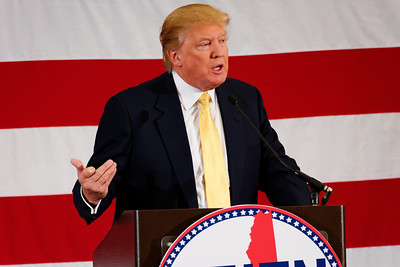
President Donald Trump is throwing his full support behind a Republican-led push to permanently end America’s twice-yearly clock changes, calling the current system a “ridiculous” and expensive mess.
Trump celebrated Thursday after the House Energy and Commerce Committee overwhelmingly voted to advance the Sunshine Protection Act, legislation that would make daylight saving time permanent.
The bill, introduced by Florida Republicans Sen. Rick Scott and Rep. Vern Buchanan, was folded into a larger transportation funding package known as the Motor Vehicle Modernization Act.
“This is so important in that Hundreds of Millions of Dollars are spent every year by people, Cities, and States, being forced to change their Clocks,” Trump wrote on Truth Social.
“Many of these Clocks are located in Towers, and the cost of renting, or using, Heavy Equipment to do this twice a year is prohibitive!”
🎇Honor America’s 250th Anniversary!!!🎇 Get your 2026 Heritage Foundation commemorative membership card ➡️➡️➡️ ACTIVATE YOUR MEMBERSHIP NOW!!! 🇺🇸🇺🇸🇺🇸
Trump also promised to aggressively push for the bill to become law.
“I’m going to work very hard” to get the Sunshine Protection Act signed, Trump wrote.
“It’s time that people can stop worrying about the ‘Clock,’ not to mention all of the work and money that is spent on this ridiculous, twice yearly production.”
Trump framed the proposal as both common sense and good politics.
“It will also be a very nice WIN for the Republican Party,” he wrote. “Take it!”
“We are going with the far more popular alternative, Saving Daylight, which gives you a longer, brighter Day — And who can be against that — This is an easy one!”
The president has repeatedly pushed lawmakers to eliminate the twice-a-year time changes.
Last year, Trump urged Congress to “push hard for more Daylight at the end of the day.”
“Very popular, and most importantly, no more changing of the clocks, a big inconvenience and, for our government, A VERY COSTLY EVENT!!!” he wrote at the time.
Still, Trump has occasionally acknowledged the issue is more politically divisive than it first appears.
In March 2025, Trump admitted Americans remain deeply split over whether they prefer lighter mornings or brighter evenings.
“This should be the easiest one of all, but it’s a 50-50 issue,” Trump said. “If something’s a 50-50 issue, it’s hard to get excited.”
“I assume people would like to have more light later, but some people want to have more light earlier, because they don’t want to take their kids to school in the dark,” he continued.
“A lot of people like it one way, a lot of people like it the other way, it’s very even.”
The latest version of the Sunshine Protection Act marks another attempt by Republicans to finally end the decades-old system of springing forward and falling back.
Florida Republicans have been leading the charge for years. Marco Rubio previously championed the legislation before becoming secretary of state. Scott and Buchanan later took over the effort.
Buchanan celebrated the committee vote Wednesday while arguing the time changes create unnecessary health and safety problems.
“Floridians and Americans across the country are tired of the biannual time change,” Buchanan said.
“The evidence is clear that permanent daylight saving time can improve public health, reduce traffic accidents, lower crime and encourage more outdoor activity.”
“Ending the clock change is a commonsense reform that will improve everyday life for millions of Americans.”
The Senate actually passed an earlier version of the bill unanimously in March 2022.
But the House never took it up before the congressional session expired.
The proposal now has 32 cosponsors, including 29 Republicans and three Democrats.
Under the legislation, states would effectively lock their clocks onto the schedule currently observed between March and November.
Hawaii and most of Arizona would remain exempt because they already observe standard time year-round. The push has steadily gained traction at the state level.
According to the National Conference of State Legislatures, at least 20 states have passed laws or resolutions supporting year-round daylight saving time if Congress ultimately authorizes the change.
Supporters argue the extra evening daylight boosts commerce, lowers crime and encourages people to spend more time outdoors.
Matt VanHyfte, communications director for the Energy and Commerce Committee, pointed to research showing spikes in traffic fatalities immediately following clock changes.
“The Committee held a hearing last November and heard testimony that an extra hour of sun at the end of the day boosts economic activity,” VanHyfte said.
“There is evidence that changing time is a highway safety concern.”
Rep. Gus Bilirakis, R-Fla., also backed the legislation during Thursday’s markup session. “It’s about time we get it through,” Bilirakis said.
Health experts have repeatedly raised concerns about darker winter mornings, particularly for children traveling to school.
The United States actually tried permanent daylight saving time once before during the 1970s oil crisis.
Congress passed the measure in late 1973, and President Richard Nixon signed it into law as an emergency energy-saving effort.
But public support quickly collapsed after children across the country began walking to school in darkness during the winter months.
By October 1974, President Gerald Ford signed legislation reversing the policy.
Even so, the current Republican push appears to have more momentum than previous attempts.
In addition to the Sunshine Protection Act, several other bills have been introduced that would allow states to independently adopt permanent daylight saving time.
Another proposal, known as the Daylight Act of 2026, would permanently move clocks forward by only 30 minutes instead of a full hour. That bill remains stalled in committee.
For now, Trump appears determined to keep hammering the issue as another populist fight against what he views as pointless government inconvenience.
“Who can be against that?” Trump wrote.




Do it, it’s long over due