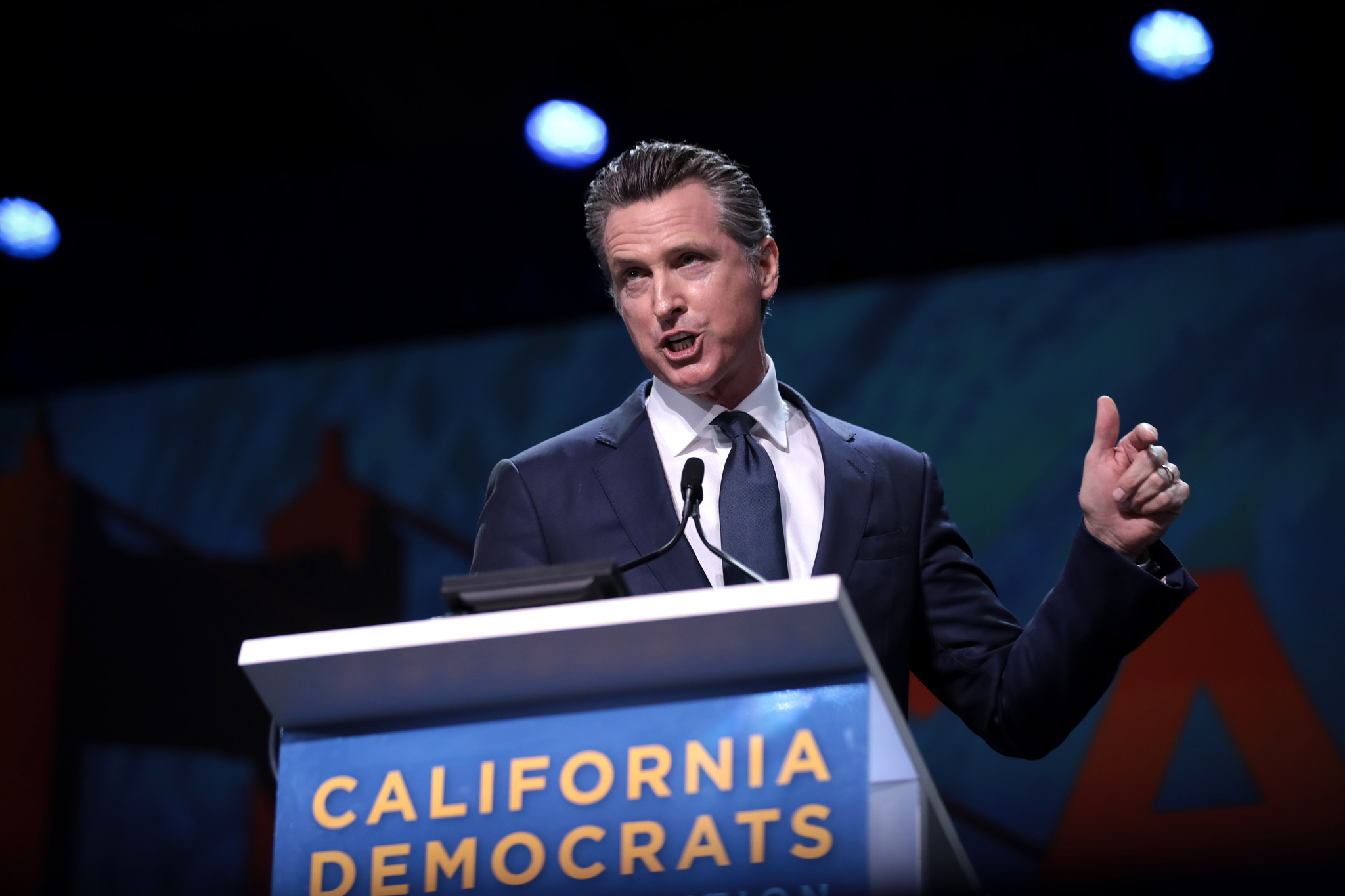
California Gov. Gavin Newsom accused President Donald Trump of trying to suppress voters after the Justice Department sued California over 20,000 registered voters whose citizenship the federal government questioned.
The Democrat argued that the White House was pressuring election administrators to disregard voting protections, insisting that California would not surrender control of its elections to Washington.
“Trump is now demanding that California election officials VIOLATE federal law,” the governor wrote on X.
“California’s elections are NOT Donald Trump’s to control. We will ensure EVERY California voter can participate in a free and fair election.”
The lawsuit arrived Thursday as California officials were already distributing mail ballots, with fewer than three weeks remaining before the midterm elections.
This is a sad, desperate attempt by Trump to use his politicized Justice Department to try to suppress California voters just three weeks before Election Day.
Courts have made clear the federal government has no role in running state elections.
We will defend free and fair… https://t.co/szA7UpePjc
— Governor Gavin Newsom (@CAgovernor) October 15, 2026
California had received an ultimatum Tuesday. The Justice Department wanted election administrators to investigate approximately 20,000 people identified through Department of Homeland Security information, allowing just 48 hours to compare the names against state registration records before facing possible legal action.
The federal request also came with an unusual delivery method: a USB drive containing files that election officials were expected to examine despite concerns about the security of the device.
Newsom pointed to the timing as evidence of what he considered an effort to undermine California voters.
🪖Seventeen battle-tested candidates are ready to strike a decisive blow to the Democrat Machine — but they urgently need resources. 🪖 Join the grassroots push to save the House Majority and back them today! ➡️➡️➡️ Make a 17X impact!!! 🇺🇸🇺🇸🇺🇸
“This is a sad, desperate attempt by Trump to use his politicized Justice Department to try to suppress California voters just three weeks before Election Day,” Newsom charged.
He also accused Washington of exceeding its authority over state elections, promising that California would defend its voting procedures against the administration’s demands.
Washington’s case focuses on whether California might accept ballots from people who are not U.S. citizens. The Justice Department contends that the disputed individuals received mail ballots despite questions about their eligibility.
Federal lawyers have not established that the people identified are actually noncitizens. Their lawsuit instead describes a group the government considers likely to lack citizenship and seeks to have ballots returned by those individuals kept apart while their eligibility is investigated.
California automatically sends ballots to everyone listed as an active registered voter, a practice Attorney General Todd Blanche identified as a reason for seeking emergency court intervention.
“This is of serious concern because California automatically mails ballots to every active registered voter on its voter rolls, whether a voter has requested a mail ballot or not,” Blanche wrote on social media.
The attorney general maintained that the state’s handling of the disputed registrations justified federal intervention.
“California has refused to comply and intends to facilitate noncitizens in voting, which is a violation of federal law,” he alleged.
California Secretary of State Shirley Weber (D-CA), a defendant in the case, demanded evidence establishing why the federal government had singled out those voters.
Her Thursday letter expressed “serious doubts” about the federal figures and rejected the idea that unverified allegations were enough to warrant immediate action.
Weber’s objections extended to Homeland Security’s earlier estimates. The department had suggested in July that California might have as many as 190,000 noncitizens registered to vote, but the government’s preliminary examination had identified approximately 81,000 potential registrants.
That difference left Weber demanding an explanation of how federal officials arrived at their allegations before California considered changing anyone’s voting status.
Her office had asked DHS to document its findings, according to Weber. Instead of answering on paper, the department sought a call or meeting, leaving the secretary of state without the written information she wanted to examine.
“To date, DHS still has not provided any information about the underlying data or methodology requested by my office,” Weber wrote.
California’s timetable for registration changes presented a separate legal dispute. The state prohibits voter cancellations after August 5, a restriction Weber had already brought to the administration’s attention before the October demand arrived.
She argued that the federal government was insisting on an enormous last-minute review without first providing the documentation necessary to evaluate its claims.
“Despite failing to send the list of alleged non-citizens to my office, you demand that we request transmittal of the list, review and confirm the citizenship status of each of the approximately 20,000 individuals on the list on the eve of an election and within a mere 48 hours,” she protested. “This is an emergency of the DOJ’s creation.”
Weber nevertheless indicated that her office would examine credible proof of voter ineligibility if Washington supplied the evidence and explained its findings.
Los Angeles County, also named in the lawsuit, questioned the federal government’s approach before anyone even examined the information.
The files arrived on a thumb drive, with the password written by hand in the accompanying letter. County administrators considered the device unsuitable for their computer systems under existing information-security rules.
Registrar-Recorder and County Clerk Dean Logan explained why his office had declined to examine the device.
“We have not accessed the drive because doing so would conflict with established data privacy and information security protocols. We do not consider the device a secure medium,” Logan stated.
The letter created another problem for county administrators. Without a clear accounting of the files’ contents or the number of voters involved, officials could not determine the full scope of the review Washington expected them to conduct.
Logan maintained that any decision affecting someone’s voter registration must rest on verifiable evidence and the procedures established under state and federal law.
California Attorney General Rob Bonta also opposed the federal action, stressing that election officials were already administering an election in which most voters had received their ballots.
His response challenged the administration’s justification for emergency intervention, citing election counts, recounts and audits that he maintained had consistently failed to uncover widespread voter fraud in the United States.
Bonta said California would contest the Justice Department’s demands in court rather than accept the federal government’s proposed intervention.
“The Trump Admin’s last-minute demands are meritless, and we look forward to making our case in court,” Bonta declared.