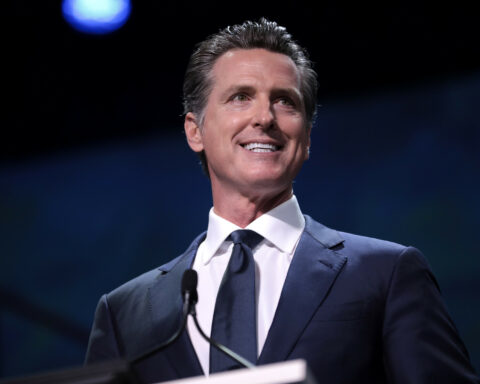
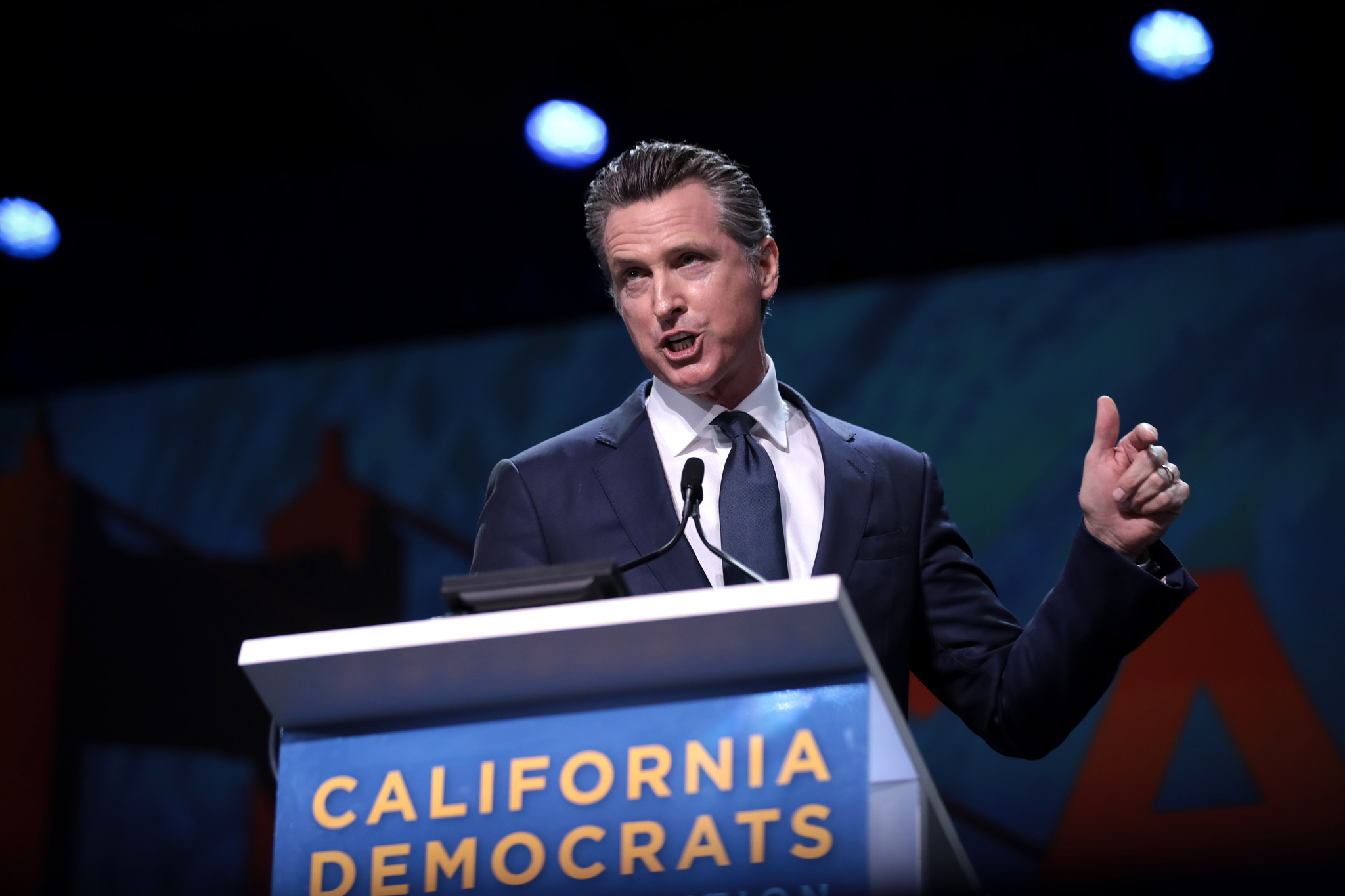
California Gov. Gavin Newsom (D-CA) signed a new law that will make older, deep-pocketed companies doing business in the state publicly account for whether their corporate histories reach back to slavery.
The Truth In Disclosure Act applies to companies that were operating by Dec. 31, 1964, and now report more than $100 million in annual worldwide gross receipts.
Those businesses must dig through their records and file sworn declarations on whether they, or companies they descended from, bought or sold enslaved people, insured them, accepted them as loan collateral or participated in other slavery-related transactions.
The filings will be made “under penalty of perjury,” with the results placed in an online database for public review.
California Democratic Assemblymember Isaac Bryan (D-CA), who authored the bill, pitched the measure to lawmakers in June as a way to show how private business profited from enslaved labor.
“For centuries, private corporations across the country benefited from chattel slavery,” Bryan said during a Senate Standing Committee on Public Safety hearing. “They benefited from the economic wealth transfer of free labor.”
Newsom framed the law around company archives dating back to 1849, pointing to insurance policies on enslaved people and lending arrangements where human beings were treated as collateral.
“This is a bill that requires large companies that operated before 1965 to search their records for ties to slavery going back to 1849 and then we make it public. These are insurance policies on enslaved people. Human beings used as collateral, quite literally as collateral for loans. Accountability, as Bryan said, starts with the truth,” Newsom said.
🎓Support Defending Education’s mission to expose political agendas in America’s classrooms and restore quality education for all! 🎓 Help protect students and strengthen education nationwide ➡️➡️➡️ DONATE TODAY!!! 🇺🇸
The bill advanced with 60 Democrats voting in support and passed along party lines.
The act also includes language about rooting slavery and human trafficking out of direct supply chains for tangible goods offered for sale, but critics fear the new reporting mandate will become part of California’s larger reparations push.
Newsom created the nation’s first reparations task force in 2020. The panel later recommended a K-12 Black Studies curriculum, property tax relief for African Americans, especially descendants living in formerly redlined neighborhoods who buy or build a new home, and actions involving mental health and county jails.
California lawmakers have also considered lifetime restitution for black Americans that could exceed $1.2 million.
The Pacific Research Institute estimated that reparations could cost more than $2.8 trillion, reduce the economy by 11% and substantially increase state taxes.
Newsom did not endorse the task force’s proposed direct cash payments in 2023. “Dealing with that legacy is about much more than cash payments,” Newsom said.
The new disclosure requirement follows another major slavery-related action Newsom approved in 2024, when the California Legislative Black Caucus pushed a slate of bills it considered important to black Californians.
One of those measures was a formal state apology for slavery.
The apology, coauthored by Democratic Assemblymember Reginald Byron Jones-Sawyer, Sr. (D-CA), “affirms California’s recognition of the harms caused by chattel slavery and issues a formal apology, which will be memorialized with a plaque in the State Capitol.”
Newsom also said in a 2024 press release that California was accepting responsibility for its role in slavery and the racial disparities that continued afterward.
“As we confront the lasting legacy of slavery, I’m profoundly grateful for the efforts put forward by Chair Wilson and the members of the California Legislative Black Caucus,” Newsom said. “The State of California accepts responsibility for the role we played in promoting, facilitating, and permitting the institution of slavery, as well as its enduring legacy of persistent racial disparities.”
Newsom’s latest round of actions also hit a tax strategy used by some luxury-car owners who register expensive vehicles through Montana shell companies.
Senate Bill 1406 was signed Sept. 30 after passing the Assembly 59-19 and the Senate 31-8.
The Montana strategy relies on the state’s lack of a statewide sales tax on vehicle purchases and rules that allow people outside Montana to form LLCs, title vehicles through those companies and register them there before bringing them home.
California can now treat some of those companies as state residents when a California resident has an ownership stake or beneficial interest in the entity.
The law also lets the state pursue people connected to the company for unpaid taxes, interest and penalties tied to vehicles, vessels or aircraft, including officers, managers, partners, beneficial owners and members, and nonpayment may be prosecuted as a crime.
State Sen. Jerry McNerney, who introduced the bill and chairs the Senate Revenue and Taxation Committee, said the measure targets wealthy owners who use Montana shell companies to buy luxury vehicles and bring them back to California.
McNerney said closing the loophole would help “restore some fairness to our sales tax system” and allow the state to recover up to $20 million annually for road repairs and other essential services.
Newsom also signed a bill formally recognizing Eid al-Fitr and Eid al-Adha as state holidays, making California the second state after Washington to recognize both holidays statewide.
Public schools and colleges may choose to close for the holidays, and state employees may observe them, but schools and businesses are not required to shut down and courts must remain open.
Newsom also issued an executive order directing state agencies to continue using “artificial intelligence” or “AI” after President Trump pushed the federal government to adopt “Super Intelligence.”
Trump said last Tuesday that the technology is “not artificial, we all agree on that.”
Newsom’s order described California’s position as “informed by common sense.”
“Super intelligence is clearly not coming from the White House — that’s why California continues to lead,” Newsom said.
The AI-related bills Newsom signed alongside the order require layoff notices tied to AI and restrict how companies can rely on AI when disciplining or firing workers.