
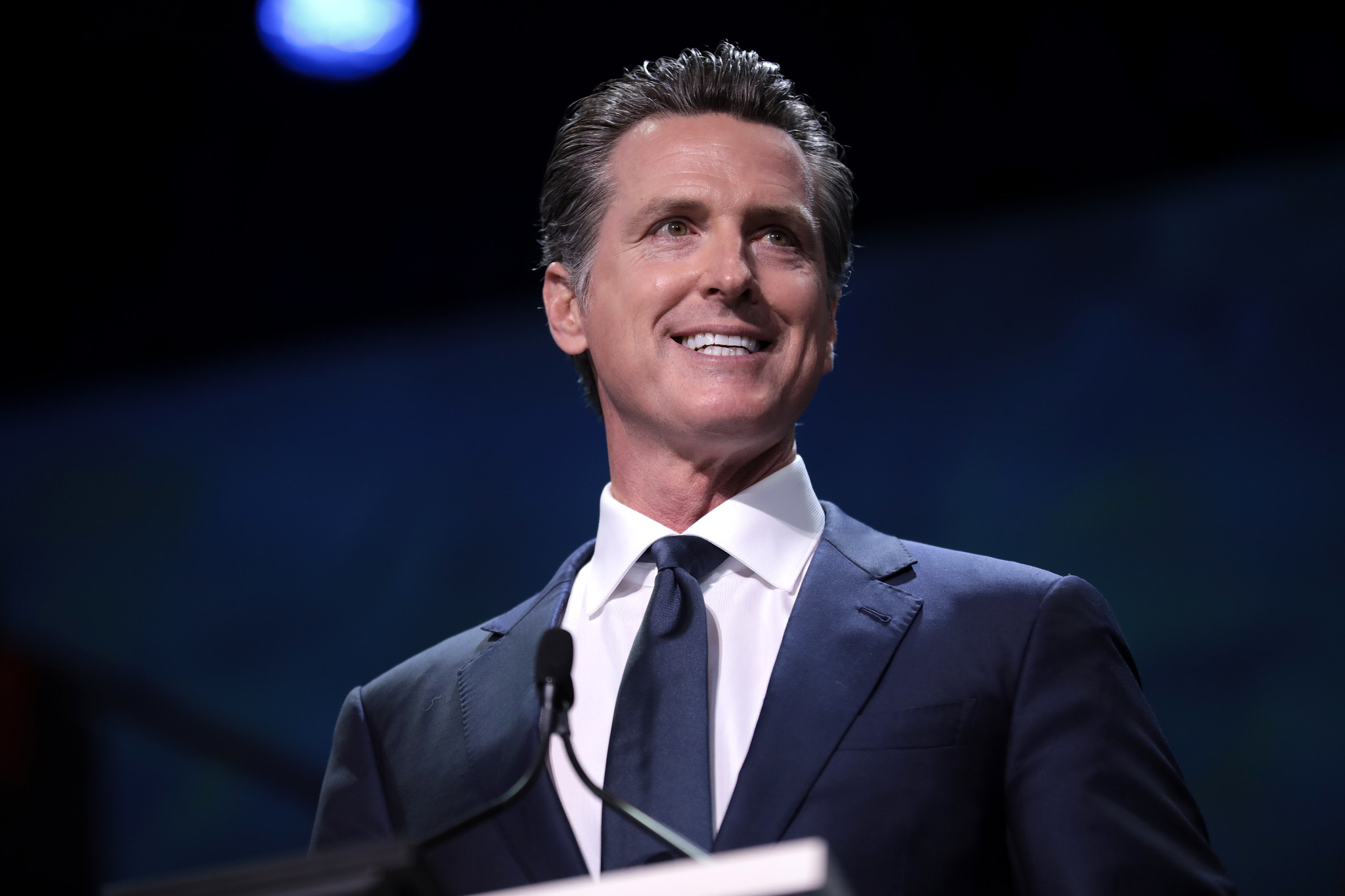
California Gov. Gavin Newsom is trying to turn a billionaire-tax fight he does not want in Sacramento into a national economic crusade.
A day after California’s billionaire-tax ballot measure advanced without his support, Newsom pitched a federal version aimed at the nation’s richest households.
In a Substack essay, Newsom folded wealth inequality into his national political brand, calling for an “economic reset” under the headline “It’s time for a national billionaires’ tax and a new social compact.”
The plan pairs a minimum tax on billionaires and $100 million-plus households with a public equity fund tied to AI-driven gains.
But the timing left Newsom explaining an awkward contrast as he wants Washington to tax billionaires while opposing a California-only version headed to voters.
The labor-backed California Billionaire Tax Act would hit residents worth more than $1 billion with a one-time 5 percent levy meant to help cover healthcare and other state costs.
Earlier in the week, Newsom had publicly vowed to keep the measure off the ballot.
“This will be defeated. There’s no question in my mind,” he said. “I’ll do what I have to do to protect the state.”
🗳️Turning Point PAC is deploying the largest ballot-chasing operation in U.S. History to secure key battleground states. 🗳️ Keep our grassroots army in the field and protect future victories! ➡️➡️➡️ DONATE TODAY!!! 🇺🇸🇺🇸🇺🇸
By Friday, with the measure moving forward anyway, Newsom used his Substack post to argue that California was the wrong battlefield for a wealth tax.
Newsom conceded the California push was driven by real financial anxiety, but said its spending formula was too narrow because it steered revenue away from priorities like schools and housing.
The governor cast the national tax push as a fight for working Americans squeezed by rules written for the ultra-rich.
“They did everything right, and the system still has nothing for them,” Newsom asserted.
“What stands in their way is the federal tax code, a corporate code, and an inheritance code written for a different set of Americans.”
He also warned that a state-by-state wealth tax could send billionaires shopping for friendlier terrain.
“The fight to make the wealthiest Americans pay more in taxes is not one we should be fighting state by state,” he noted.
“You may not be able to pick up and move to Texas or Florida to shelter your income from taxation, but I promise you that billionaires can, and do. Wealth is moveable, and it shops for the state with the lowest taxes.”
It's time for a national billionaires tax and a new social contract.
10% of Americans own two-thirds of the wealth. Wages have stagnated. The cost of living has skyrocketed.
The system is fundamentally broken.
The federal tax code, a corporate code, and an inheritance code… pic.twitter.com/tLRbUId6yi
— Gavin Newsom (@GavinNewsom) June 26, 2026
“The fight belongs at the federal level, where this broken system was created in the first place,” Newsom maintained.
With his final California term ending in January 2027, Newsom described the proposal as a modern Buffett Rule, invoking billionaire Warren Buffett’s advocacy for wealth redistribution.
He said the federal government should ensure people at the top pay at least the same tax rate as their own workers.
He also targeted loopholes and exemptions that, in his telling, give the ultra-rich “their own private tax code.”
Newsom singled out the “tax-free lifestyle loan,” better known as “buy, borrow, die,” where major assets are used as borrowing power instead of taxable income.
The California Democrat also urged changes to inheritance rules, arguing that inherited fortunes risk hardening into a political and economic caste system.
“If we do not act, that transfer of wealth among the ultra-wealthy will lock in a permanent American aristocracy of inherited wealth, with all the political consequences the founders warned us about,” he cautioned.
The corporate side of the plan would undo the post-2017 rate cut created under Trump’s first-term tax law.
Newsom’s AI proposal added a futuristic plank to the message. He called for a “national public equity fund” meant to “ensure every American owns a stake in the future being built by AI.”
“The system America’s founders built was designed to prevent the concentration of power in a few hands, but we have allowed that concentration to happen anyway, slowly, in plain sight, over decades,” Newsom argued. “We can reverse it together, as a country.”
The California Department of Finance found that the proposal could generate tens of billions, while also warning that billionaire flight could leave the state with ongoing losses in the hundreds of millions.
The one-time tax would be collected in five annual installments of 1 percent each.
The labor group behind the measure, SEIU-United Healthcare Workers West, says 90 percent of the money would go toward offsetting Trump-era healthcare cuts.
Newsom cited that healthcare-heavy structure as another reason to reject the measure.
“This measure dedicates almost all of the revenue it raises to a single category of state spending,” he objected.
“It ignores our public schools, as the California Teachers Association has rightly pointed out, by failing to provide sustainable funding that our communities, parents and children deserve.”
Rep. Ro Khanna, another California Democrat mentioned in 2028 speculation, sided with the ballot measure and dismissed Newsom’s federal pitch as too weak.
“Taxing the loans on assets is something that the tech oligarchs themselves have proposed,” Khanna argued.
“That will raise a fraction of the revenue of an actual wealth tax, the kind that Bernie Sanders or Elizabeth Warren or I have proposed.”
Khanna accused Newsom of siding with wealthy Californians by refusing to support the state proposal.
“It’s a gulf of difference between me and the governor, and it’s the difference between standing up for three million in Californians who are losing healthcare, or standing for the billionaire class,” Khanna charged. “This is a defining difference for the Democratic Party.”
“We cannot have a country or a Democratic Party that continues to defer to them because we want their money for our campaigns or because we want their money for our super PACs,” Khanna critiqued.
In March, Khanna and Sen. Bernie Sanders of Vermont proposed a 5 percent federal billionaire wealth tax, with the proceeds funding $3,000 payments to households earning $150,000 or less.



Newscum looks demented! He has such high hopes for all his failed projects! And he still looks like his hair is all greased up in a disgusting way. He is NOT a good looking man but a petulant baby!