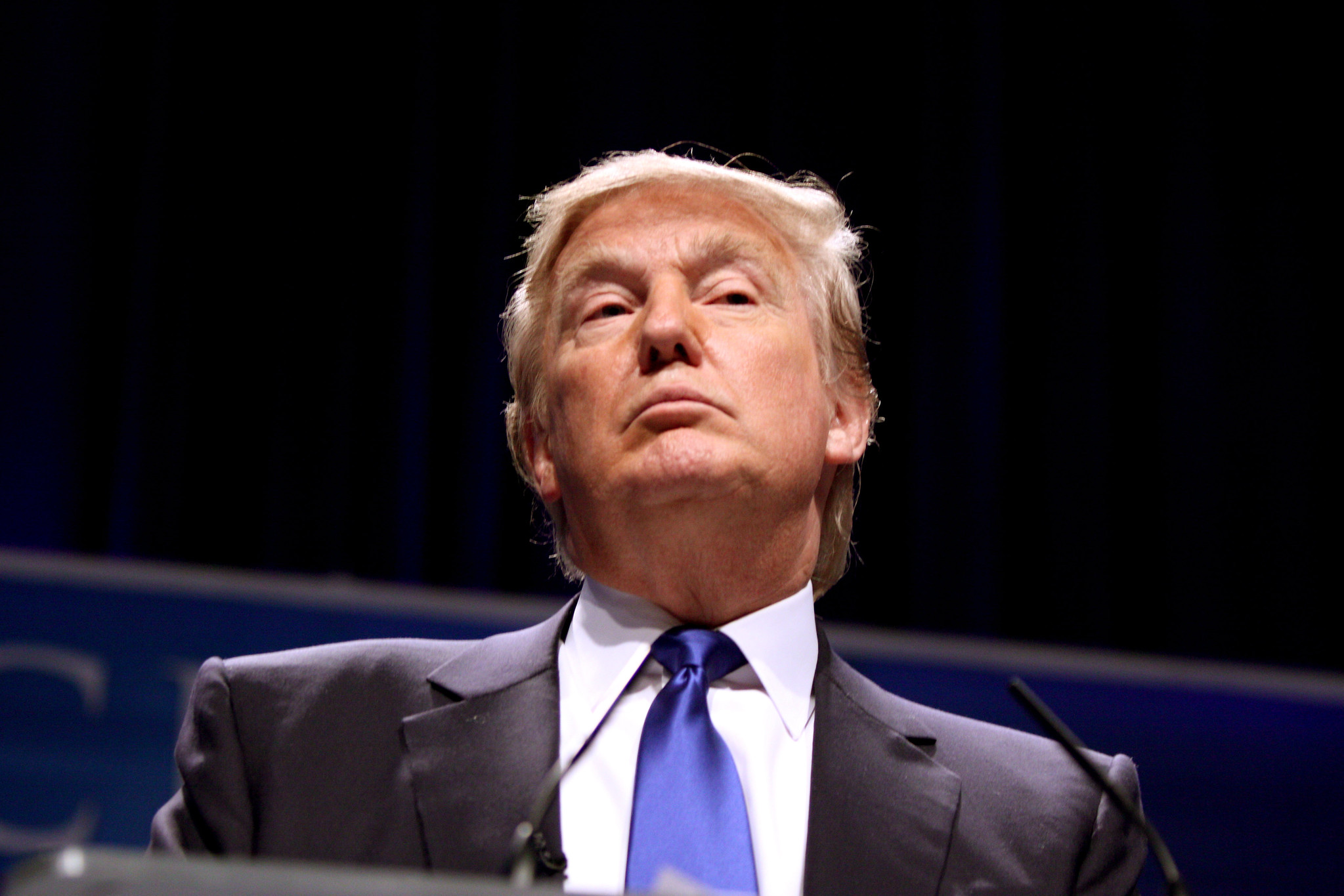
President Donald Trump suggested Monday that medical and pharmaceutical groups may be one reason major media outlets avoid pressing harder on vaccines.
The comment came as Trump signed an executive order reshaping federal childhood vaccine recommendations, cutting the list of diseases covered by the guidance and igniting immediate pushback from major medical organizations.
A reporter asked Trump why the establishment media so often refuses to even raise questions about vaccines.
“It’s amazing,” Trump replied. “When you come up with a recommendation for a vaccine, it could be the medical groups, the pharmaceutical groups, I don’t know, you know? But it is amazing. There’s nothing that we lose with this.”
Trump presented the order as a low-risk change with potentially massive upside.
.@BreitbartNews’s Nick @Gilbertson_DC: “Why does the establishment media so often seem to be against even asking questions about vaccines?”
Trump: “It’s amazing. When you come up with a recommendation for a vaccine, it could be the medical groups, the pharmaceutical groups, I… pic.twitter.com/B9NkCQ1EwX
— Curtis Houck (@CurtisHouck) August 10, 2026
“If the worst thing that would happen would be nothing happens. We’re not going to lose anything,” he said.
“At the same time … we could save hundreds of thousands of lives, millions of lives, and I wish we could have done it a long time ago.”
The new guidance recommends immunizations for 11 diseases. The Centers for Disease Control and Prevention’s 2024 recommendation covered 18.
🎓Help millions think clearly and communicate with power through Hillsdale College’s free “Classical Logic and Rhetoric course! 🎓 Expand education for liberty and equip the next generation ➡️➡️➡️ TAKE THE FREE COURSE NOW!!! 🇺🇸🇺🇸🇺🇸
The reduction is only one piece of the order. Trump’s plan also changes how the administration treats hepatitis, COVID-19 and influenza shots for children, while calling for the combined MMR vaccine to be broken into separate measles, mumps and rubella shots given during different visits.
Parents could still choose hepatitis, COVID-19 and flu shots, but those shots will no longer be recommended for all children.
Trump used the signing to attack the old schedule as excessive, comparing the United States unfavorably with other developed nations.
“For long and far too long … America has recommended more childhood vaccines than any peer nation, and even twice as many doses as some European countries and even more than that,” the president said.
He reserved some of his strongest language for the number of doses given to children and the timing of the Hepatitis B shot.
“In many cases, we were requiring 72 jabs for our beautiful, healthy, lovely, delicate little children, including giving the Hepatitis B shot to infants and newborns on top of many other vaccinations,” Trump said.
Trump said the Hepatitis B shot should wait until a child is 14 or 15 years old.
He described the revised schedule as a narrower set of “gold standard childhood vaccine recommendations” aimed at the most serious diseases.
“Effective immediately, my administration is recognizing gold standard childhood vaccine recommendations for only 11 core vaccinations against the most serious and dangerous diseases, along with the MMR, which hopefully will be split up,” Trump added.
Trump told reporters the three MMR components may be safer apart than together.
“Together there could be a possibility that they are quite lethal, and separately, it looks like they are not at all lethal, just very effective,” Trump said.
He cast the order as both a return to common sense and an effort to bring the United States closer to other countries.
“This updated recommendation vitally aligns the United States with other advanced and developed nations around the world; more importantly, it aligns us with common sense and knowledge,” Trump explained.
The White House also pointed to a scientific assessment that found the United States recommends more childhood vaccines than any peer nation and more than twice as many doses as some European nations.
The assessment found that most peer nations maintain high childhood vaccination rates through public trust and education rather than mandates.
States with school vaccine requirements were advised to weigh the new recommendations, while federal agencies were told to advance them through their existing powers.
Trump said the administration had tried to act sooner but was blocked by a court in Massachusetts.
“We got stopped by court,” he said. “We had a court, I guess, in Massachusetts that stopped us very early on.”
The president said he had believed in the change for a long time and predicted the new recommendations would have major effects.
“I’ve believed in this for a long time, so now, we’re getting it done, and I think you’re going to see potentially tremendous results,” Trump continued.
Trump also linked the order to questions about autism, saying today’s number of cases “did not exist” in earlier generations.
“We’re going to bring it back much closer to where it was,” he noted, referring to autism diagnoses.
He acknowledged that the cause of autism remains unknown, while arguing that vaccine recommendations should be part of the administration’s research focus.
“While we do not know what the cause is with respect to autism, it is essential to our research efforts that we have the very best vaccine recommendations in the entire world,” Trump said.
Medical groups quickly rejected the shift. Dr. Willie Underwood III, president of the American Medical Association, said Monday that Trump’s recommendations put “children’s health at risk.”
“Vaccines are among the most thoroughly studied, effective tools we have to protect children from serious vaccine-preventable diseases,” Underwood said in a release.
“Decisions about how and when vaccines are used should be driven by rigorous scientific evidence, patient safety, and independent medical and public health expertise.”
Underwood warned that changing the schedule without credible evidence could weaken public confidence and endanger children.
“Altering a proven vaccination schedule without credible evidence risks weakening public confidence and putting children’s health at risk,” he said.
He pointed instead to the American Academy of Pediatrics childhood immunization schedule, which he said recommends vaccines “based on specific disease risks and healthcare delivery in the U.S.”
Underwood also pushed back on any link between vaccines and autism.
“Extensive evidence from decades of scientific studies shows no link between vaccines and autism,” he added.
“If you have questions about vaccines, talk to your child’s physician. Putting our children’s health at risk is not an option.”
Dr. Andrew Racine, president of the American Academy of Pediatrics, also condemned the order Monday.
“As measles cases reach a 35-year high in the U.S. and with cold and flu season quickly approaching, today’s executive order on vaccines is not only disheartening but dangerous,” Racine stated.
“Instead of ensuring every family can access life-saving vaccines for measles, influenza, RSV and more, federal leaders are once again spreading misleading claims,” Racine added.