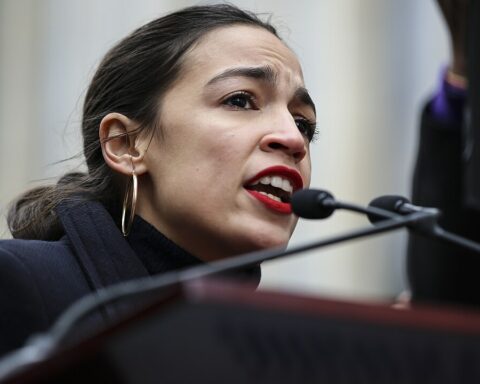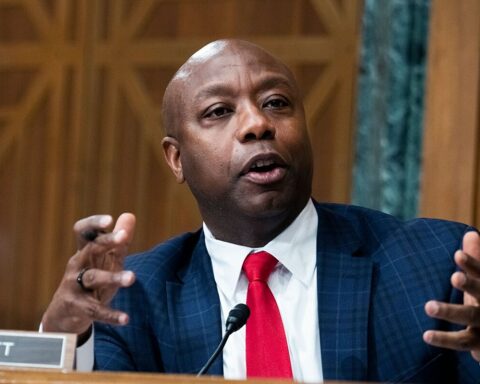

Sen. Chris Van Hollen announced he will challenge Senate Minority Leader Chuck Schumer for control of the Democratic caucus, setting up a closed-door vote on Jan. 4.
The winner is in line to become Senate majority leader when Democrats take control of the chamber.
The Maryland Democrat cast the contest as a test of how his party responds to voters who handed it a Senate majority.
In his announcement, he said voters wanted a change from President Donald Trump’s policies and from a status quo that he argued was failing working people.
“It’s now on us to meet this moment, and to do that we need new leadership,” Van Hollen said.
In this election, Americans called on us to unrig an economy rigged against working people & fueled by political corruption.
To deliver, we need new leadership. This isn't about any one person – it’s about answering that call.
That's why I’m running for Senate Majority Leader.
— Senator Chris Van Hollen (@ChrisVanHollen) November 13, 2026
In the statement, he framed the challenge as a response to what voters asked for in the election.
He also made clear that he was running to become majority leader once Democrats took control.
The New York Democrat responded on X that he welcomed a discussion about the caucus’s future.
🎇Honor America’s 250th Anniversary!!!🎇 Get your 2026 Heritage Foundation commemorative membership card ➡️➡️➡️ ACTIVATE YOUR MEMBERSHIP NOW!!! 🇺🇸🇺🇸🇺🇸
He pointed to “55 seats and counting” as a result Democrats had achieved together while he made his case to remain in charge.
Schumer’s post also included a direct claim about the caucus vote. He wrote that “I have the votes to continue serving as Democratic Leader” while expressing confidence that he would lead the new majority.
He led the majority from 2021 to 2025 and had previously said he had the support to return to the post. The Jan. 4 vote, scheduled after the new Congress is sworn in, requires a majority of the caucus.
The challenge comes after Van Hollen sounded out Senate Democrats on a listening tour.
He had also considered entering the 2028 presidential conversation before deciding to seek the caucus leadership.
Van Hollen, 67, has served in Congress for 23 years and moved from the House to the Senate in 2017. His opponent has held elected office since 1981 and is now 75.
Schumer will be 76 by the vote, and his age has been one reason some have called for him to step aside.
Earlier in the week, the challenger accused Schumer of siding with the “crypto industry” and the American Israel Public Affairs Committee over progressive candidates who went on to win in the midterms.
On Thursday evening, he used an interview with MS NOW’s Jen Psaki to draw a contrast over how quickly Democrats should act on the war in Iran.
Van Hollen argued that voters wanted the war to end and prices to come down. He told Psaki the party should act before it takes the majority in January.
In the interview, his message was “We should do it now.”
Two senators had already publicly refused to back Schumer before the formal challenge.
Vermont independent Bernie Sanders and Michigan Democrat Elissa Slotkin made their opposition known at a joint news conference Tuesday.
Sanders endorsed Van Hollen in a social media post, tying his support to what he saw as a mandate to confront special interests and billionaires. His endorsement called for the party to fight for working families.
The Vermont senator had previously told Jon Stewart on The Weekly Show that he would support Van Hollen if he entered the race.
He described his ties to Schumer, including growing up in the same neighborhood and attending the same elementary school, while arguing that the party needed leadership that would act more forcefully on voters’ economic concerns.
In that interview, Sanders argued voters “are sick and tired of the status quo” and argued that the party could no longer stick with the same approach.
Slotkin’s remarks at the news conference made clear she would withhold support from the incumbent.
Sen.-elect Abdul El-Sayed, who had urged Van Hollen to run in April, also backed him after the announcement. He said the public had rejected “Trumpism” in the election but argued that Democrats still had to earn their mandate.
The senator-elect pointed to the Maryland Democrat’s experience and courage as reasons he had encouraged him to seek the post. His endorsement made the case that the caucus would need both qualities when it took the majority.
Opposition to Schumer also extends to incoming Sens. Adam Hamilton of Kansas, Annie Andrews of South Carolina and Troy Jackson of Maine.
The Kansas senator-elect described the leader as a figure many voters in his state see as divisive and further to the left.
The Kansas Democrat recalled that his Republican opponent, incumbent Sen. Roger Marshall, brought up Schumer more often than he mentioned his challenger during the campaign. He estimated the leader’s name came up 17 or 18 times.
Hamilton described his preference as “a leader who can lead from the center” when asked about a successor.
He wanted someone with fresh ideas who could bring Republicans and Democrats together and also unite the factions within his own party.
Hamilton gave no endorsement when asked whom he would choose as a successor.
The senator-elect noted that he had been a pastor for 38 years and knew about 10 senators personally, mostly from brief conversations.
He said there were several senators he thought might lead from the center. He told the interviewer he did not know enough about them yet to name a shortlist or say whom he would endorse.