President Donald Trump floated the idea of parking a U.S. warship just 50 yards from Cuba’s coast Friday, imagining Cuban officials raising their hands as the vessel approached before Secretary of State Marco Rubio stepped in to negotiate.
The scenario emerged at a campaign rally in Fort Myers, Florida, where Trump’s discussion of Iran was interrupted by an audience member interested in the administration’s plans for Havana.
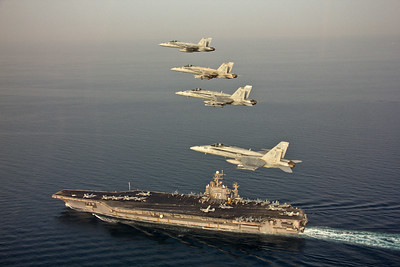
Speaking at Alico Arena at Florida Gulf Coast University, the president envisioned American naval vessels approaching Cuba after completing their mission involving Iran.
“Don’t worry. We’ll take care of Cuba on our way back from Iran. We’ll do a little stopover,” Trump assured the crowd.
In Trump’s hypothetical encounter, the sight of an American vessel just offshore would be enough to prompt Cuban officials to raise their hands.
.@POTUS: "We're gonna come back from Iran, those beautiful ships will pass Cuba. We'll have one of them stop about 50 yards off the coast. They'll raise up their hands — and then we're gonna send @SecRubio in to finish up the job."
*crowd ROARS* pic.twitter.com/91Jf26EWDM
— Rapid Response 47 (@RapidResponse47) October 23, 2026
“We’ll have one of them stop about 50 yards off the coast. They’ll raise up their hands. And then we’re going to send Marco Rubio in to finish up the deal.”
Trump was describing a possible scenario rather than announcing orders for an actual deployment.
He also suggested that Rubio might be capable of securing an agreement without any naval detour.
🗳️Turning Point PAC is deploying the largest ballot-chasing operation in U.S. History to secure key battleground states. 🗳️ Keep our grassroots army in the field and protect future victories! ➡️➡️➡️ DONATE TODAY!!! 🇺🇸🇺🇸🇺🇸
“We could just put him in there and he’ll figure it out. He’s a great guy,” the president remarked.
Trump had previously connected Cuba’s political future to his administration’s military campaign against Iran.
In March, he declared that “Cuba is next” and expressed interest in having the “honor” of taking control of the island.
Rubio, a former Florida senator who has helped direct the administration’s policies toward Havana, has repeatedly portrayed Cuba’s government as incapable of sustaining itself.
September brought additional American sanctions against figures connected to Cuba’s leadership, financial operations and activities involving the country’s resources.
Those penalties followed an administration campaign that included restrictions on oil deliveries and other economic measures. Meanwhile, electricity failures and shortages of basic goods have continued to trouble the island’s population.
State Department officials defended the September actions by identifying the communist government as a danger to American national security.
Rubio has gone further in describing the condition of the Cuban state, calling it a “failed state” last month.
“Well, the truth is Cuba has already fallen,” he told Fox News’ Sean Hannity.
The CIA has previously sought information from citizens living under governments at odds with Washington, including a 2023 effort that used Telegram to reach potential contacts in Russia.
Rubio extended that approach toward Cuba on Friday, using X to invite residents interested in political change to consider working with the American intelligence agency.
“The disappointment of failed promises, corruption, and the privileged lives of only a few; seize this opportunity to create the change you desire through a discrete partnership with the CIA,” Rubio wrote.
Director of National Intelligence Jay Clayton warned Rubio on Friday that Iranian efforts to kill Americans had progressed to an especially dangerous stage.
Clayton’s declassified memorandum described intelligence pointing to intensified Iranian preparations for lethal attacks, including operations beyond the Middle East.
“Specifically, through various channels, we have received intelligence that Iran has substantially increased efforts to target U.S. personnel,” Clayton wrote.
“The lethal plotting efforts by Iranians against U.S. citizens have reached advanced stages in both the Middle East and certain other countries.”
Neither the intended victims nor the methods under consideration were identified publicly. The memorandum also left unnamed the countries outside the region where the alleged operations might unfold.
CIA Director John Ratcliffe was among the officials copied on the communication.
Clayton proposed easing classification restrictions on as much of the intelligence as possible so Rubio could distribute the warning beyond the senior State Department officials who had already received it.
Other employees potentially affected by the threats lacked the clearances required to review the material, creating a gap between those who needed the information and those permitted to receive it.
CNN obtained the memorandum, whose authenticity was separately confirmed by American officials to multiple news organizations.
American diplomatic facilities across the Middle East have begun reducing their staffing as Washington responds to Iranian threats and intensified Houthi attacks.
A U.S. official cited by CNN identified Friday personnel-reduction orders affecting embassies in Qatar, Jordan, Lebanon and the United Arab Emirates, with staffing adjustments also under consideration at facilities in Bahrain and Kuwait.
The changes followed earlier departures of nonessential personnel and family members from American diplomatic posts in Riyadh, Jeddah and Dhahran as Houthi strikes inside Saudi Arabia intensified.
An American official connected the decisions to concerns about Iranian assassination plots and further attacks by the Iran-backed Houthis.
“We decided that due to the threat of Houthi attacks and Iranian terror plots we need to reduce our footprint and keep only essential staff,” the official explained.
Meanwhile, Trump used the Fort Myers campaign appearance to warn Tehran that another American offensive remained possible if negotiations failed.
“We may do another little Epic Fury, or they’ll agree,” he cautioned, invoking the military campaign that began in February.
Trump on Iran:
We may do another little Operation Epic Fury, or they will agree.
If they're smart, they will just say, "Let's get down to business."
But I doubt they will do that because perhaps they're not smart. pic.twitter.com/cucvWMKi4p
— Clash Report (@clashreport) October 23, 2026
Trump questioned whether Iran’s leadership would accept an agreement rather than face additional military action.
Earlier Friday, he asserted that Washington had gained control of the Strait of Hormuz, allowing oil shipments by other countries while curtailing Iran’s ability to export its own supplies.
“The question is, do we want to finish it off, or do we just want to let it wither? Because we’re getting everything we want,” he told reporters.
Renewed American or Israeli strikes could trigger Iranian attacks against targets extending beyond conventional military installations, according to contingency plans described to Reuters by two senior Iranian security officials.
Their accounts identified underwater communications cables and military facilities among the potential targets if another offensive begins.
One of those officials suggested that a renewed military assault would remove any previous restraints on Iran’s response.
“If Iran is attacked, there will be no more red lines… from undersea cables to military bases, including covert ones,” the official warned.