

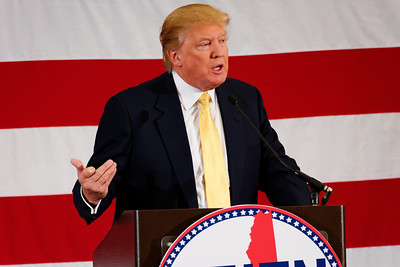
President Donald Trump declared that U.S. forces delivered one of the most powerful bombing raids of the war, claiming every military target on Iran’s Kharg Island was “obliterated.”
Trump revealed the strike Friday in a Truth Social post describing a major assault on the strategic Persian Gulf island, one of the most important hubs for Iran’s oil exports.
The president said American forces deliberately avoided destroying the island’s oil infrastructure even though it would have been an easy target.
Kharg Island handles roughly 90 percent of Iran’s oil exports, making it one of the country’s most economically vital facilities.
“Moments ago, at my direction, the United States Central Command executed one of the most powerful bombing raids in the History of the Middle East, and totally obliterated every MILITARY target in Iran’s crown jewel, Kharg Island… Iran has NO ability to defend anything that we… pic.twitter.com/2iEzCOyA3P
— The White House (@WhiteHouse) March 13, 2026
Trump framed the decision as an act of restraint during a conflict that has already shaken global energy markets.
“However, should Iran, or anyone else, do anything to interfere with the Free and Safe Passage of Ships through the Strait of Hormuz, I will immediately reconsider this decision,” Trump wrote in the post.
The strike on Kharg Island unfolded as oil prices surged during the escalating war between the United States, Israel and Iran.
Iran sits along the Strait of Hormuz, the narrow waterway through which roughly 20 percent of the world’s oil and gas supply flows.
Iranian forces have responded to the conflict by targeting vessels attempting to pass through the strait.
Several cargo ships traveling near the Iranian coast have already been struck by missiles, drones or small attack boats during the conflict.
Iran’s new supreme leader Mojtaba Khamenei signaled the confrontation could expand even further.
In his first public message since taking power, Khamenei warned that the Strait of Hormuz would remain closed.
The message aired Thursday on Iranian state television. “The lever of blocking the Strait of Hormuz must definitely continue to be used,” Khamenei stated in the broadcast.
He also threatened additional military action against U.S. allies across the Persian Gulf.
“Other fronts” in the war “in which the enemy has little experience” could open if U.S. and Israeli strikes continue, the message warned.
Trump responded to the threats with a blunt assessment of Iran’s military capabilities.
“There is nothing they can do about it!” Trump wrote.
“Iran will NEVER have a nuclear weapon, nor will it have the ability to threaten the United States of America, the Middle East or, for that matter, the World.”
The president also issued a warning to Iranian military forces.
“Iran’s Military, and all others involved with this Terrorist Regime, would be wise to lay down their arms, and save what’s left of their country, which isn’t much!” Trump added.
The administration also pushed back against criticism surrounding the conflict.
White House press secretary Karoline Leavitt rejected a CNN report suggesting Trump’s national security team failed to anticipate Iran’s potential closure of the Strait of Hormuz.
“This story is 100% FAKE NEWS,” Leavitt wrote on X.
She accused the network of relying on unnamed sources while misrepresenting the administration’s planning.
Leavitt argued that the Pentagon had prepared for this scenario long before the current war began.
“The idea that chairman Cain and Secretary Hegseth weren’t prepared for this possibility is PREPOSTEROUS,” she wrote.
“The President was fully briefed on it, and a goal of the Operation itself, to annihilate the terrorist Iranian regime’s navy, missiles, drone production infrastructure, and other threat capabilities is quite literally intended to deprive them of their ability to close the Strait.”
Defense Secretary Pete Hegseth delivered a similar response while speaking at the Pentagon.
The defense chief dismissed the CNN report as inaccurate.
“For decades, Iran has threatened shipping in the Strait of Hormuz,” Hegseth said. “This is always what they do, hold the strait hostage.”
“CNN doesn’t think we thought of that,” he added.
Hegseth also outlined the scale of the military campaign now unfolding across Iran.
The United States and Israel have already carried out thousands of airstrikes since the war began.
The Pentagon estimates more than 15,000 targets inside Iran have been struck.
“That’s well over 1000 a day. No other combination of countries in the world can do that,” Hegseth stated during a Pentagon briefing.
He signaled that the tempo of attacks will increase further.
“The number of sorties and number of bomber pulses, the highest yet, ramping up and only up,” Hegseth said.
“And quantity has a quality of its own as we continue to ramp up.”
The Pentagon also confirmed that investigators are reviewing a controversial airstrike early in the war.
The Feb. 28 strike in the Iranian city of Minab hit a school located beside an Islamic Revolutionary Guard Corps compound.
Iranian officials claim dozens of children died in the blast.
The U.S. military has opened a formal command investigation to determine what happened.
Hegseth said U.S. Central Command assigned a senior officer outside the command structure to lead the review.
“CENTCOM has designated an investigating officer to complete a command investigation,” Hegseth said.
“The command investigation will take as long as necessary to address all the matters surrounding this incident.”
The defense secretary defended American targeting procedures while the investigation unfolds.
“There’s only one entity in this conflict, between us and Iran, that never targets civilians, literally never target civilians,” Hegseth stated.
“We will investigate. We’ll get to the truth and we’ll share it when we have it.”
Preliminary reports have suggested the strike may have resulted from faulty intelligence.
The New York Times reported that early findings from U.S. officials indicate American forces likely carried out the attack.
Questions remain about the intelligence used before the strike and whether Iranian forces placed military facilities near civilian structures.
The Defense Department has not commented on the preliminary findings.
Trump also addressed the broader timeline of the conflict while speaking with reporters Friday at Joint Base Andrews.
The president said he has his own view about how long the war may last.
“I mean, I have my own idea. But what good does it do?” Trump told reporters when asked about the timeline. “It’ll be as long as it’s necessary.”
Trump has offered several predictions since the war began. Early in the operation he suggested the campaign might last four to five weeks.
He later told CBS News the war was already “very complete, pretty much.”
During a press conference at his Doral resort in Miami earlier in the week, Trump again signaled the conflict could end soon even as U.S. forces continued bombing targets inside Iran.
On Friday the president told reporters the military campaign is progressing faster than expected.
The United States, he said, is “way ahead of schedule.”




Got it, the Iranians want to be able to produce/sell/transport oil whenever and to whoever they choose BUT not allow anyone else to do so. Hmm, sounds a LOT like the political games that the democRAT party plays. Show me I’m wrong.
If we are able to win this war why don’t we?