

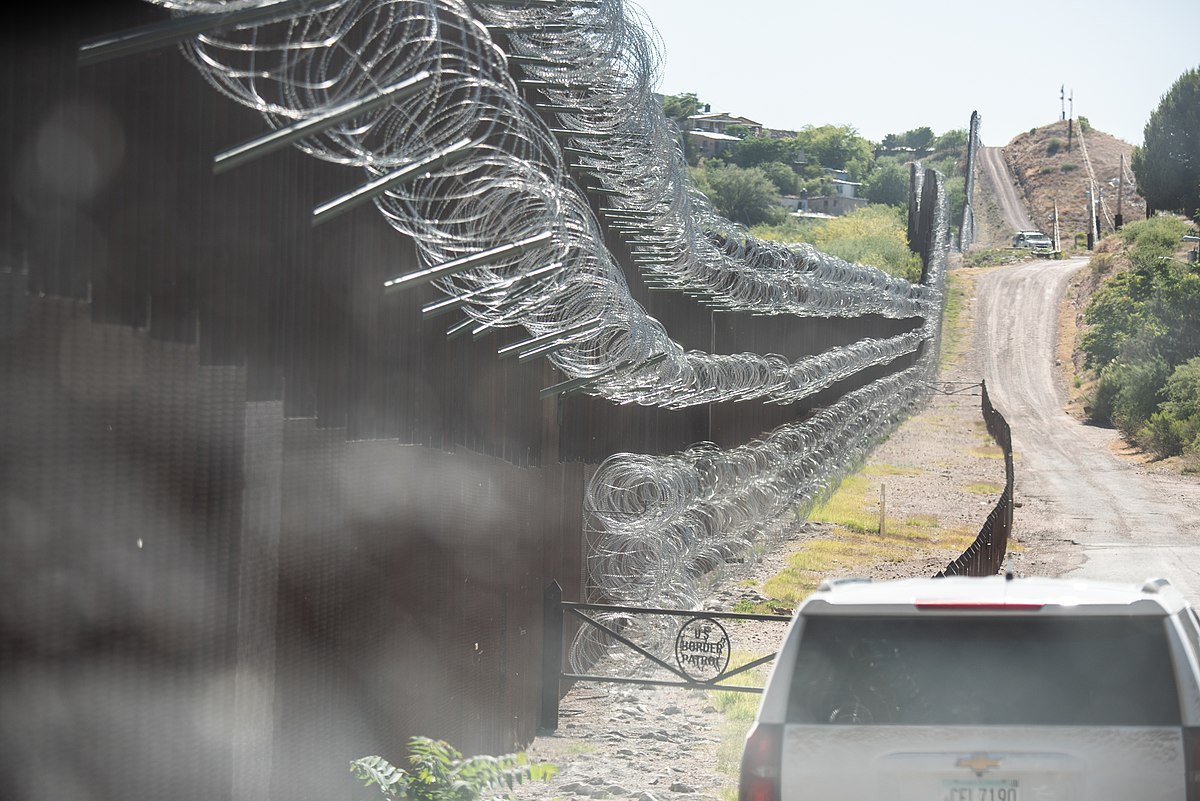
The Trump administration will tighten security along the southern border as federal officials prepared to carve out a militarized corridor in California.
The administration revealed plans to place about 760 acres in San Diego and Imperial Counties under Navy control, an expansion framed as a decisive step to curb illegal crossings.
Officials said the territory, which sits along a heavily trafficked stretch of the U.S.–Mexico border, will operate as a National Defense Area for the next three years.
According to the Department of the Interior, granting the Navy jurisdiction will allow federal personnel to detain individuals suspected of unlawful entry if they trespass on the designated land.
The agency described the corridor as a persistent hotspot for attempted crossings and noted that the zone will run from the western edge of the Otay Mountain Wilderness Area to nearly the California–Arizona border.
Interior Secretary Doug Burgum linked the action directly to the priorities laid out by the White House.
“President Trump has made it clear that securing our border and restoring American sovereignty are top national priorities,” Burgum announced.
He added that the move helps federal authorities “close long-standing security gaps” and “put the safety and security of the American people first.”
Burgum noted that officials are working with the Navy to reinforce national defense while preventing what he described as unlawful use of public lands.
The department said the area has long suffered from “significant national security challenges” tied to illegal border activity and claimed militarization could ease environmental strain caused by repeated incursions.
Lock Them Up! Russiagate is reigniting…
Obama, Clinton, Comey, and Brennan are all on the hook!
CLICK HERE to demand Russiagate conspirators got to prison!
Officials argued that the secured zone will “enhance border operations while minimizing ecological damage” associated with heavy foot traffic.
The border announcement unfolded as Trump publicly demanded immediate action from Mexico on another long‑running bilateral problem: the massive flow of raw sewage crossing into the United States.
On Wednesday, he posted that “Mexico must take care of its water and sewage problem, IMMEDIATELY. It is a true threat to the people of Texas, California, and the United States of America!” according to his Truth Social statement.
The Trump Admin has been taking important action to PERMANENTLY END the flow of disgusting raw sewage from Mexico into the United States. We are working very closely with our Mexican counterparts to ensure San Diego area beaches can reopen, foul odors cease, and the Tijuana River… https://t.co/YSVEhCkUdX
— Lee Zeldin (@epaleezeldin) December 10, 2025
Communities along the border have endured years of contamination tied to wastewater from Tijuana.
Local officials have repeatedly warned about health risks linked to pollutants carried through the Tijuana River into San Diego County.
Since 2018, more than 100 billion gallons of untreated sewage mixed with chemicals and debris have poured through the area, creating what regional leaders describe as a regional health emergency.
The contamination has been so severe that California beaches near the border have been closed a majority of the time over the past four years.
Scientists have said that wastewater can aerosolize when it foams, spreading illness even to people who never enter the water.
Reports have documented sickness among swimmers, surfers, lifeguards, schoolchildren, and Border Patrol personnel.
EPA Administrator Lee Zeldin, who signed a July Memorandum of Understanding with Mexican Environment Secretary Alicia Bárcena Ibarra, pointed to that agreement as a framework for addressing the crisis.
Under the pact, Mexico promised to complete its $93 million share of wastewater infrastructure projects and to follow a detailed project timeline through 2027.
Zeldin has said that more than $653 million has been allocated since 2020, but progress stalled because of delays on the Mexican side.
He noted that the new plan accounts for population growth, maintenance costs, and other long‑term variables to make the fix durable.
On Wednesday, Zeldin said on X that the Trump administration is determined to halt what he called the “flow of disgusting raw sewage” into U.S. territory.
He highlighted that federal agencies are coordinating closely with Mexico so San Diego‑area beaches can reopen and the Tijuana River Valley can recover.
He added that resolving the problem would benefit Navy SEALs who train nearby. In the same message, he wrote that “nothing short of total implementation” of the 2025 MOU will be acceptable and stressed the importance of finishing all Mexico‑side projects scheduled for 2026 and 2027.
The agreement designates millions toward wastewater upgrades and outlines additional steps for Mexico to prepare for continued population expansion in Tijuana.
The day’s border‑related announcements continued with a separate immigration move: the Department of Homeland Security confirmed a multibillion‑dollar plan to acquire new aircraft for deportation operations.
Officials said the administration finalized a contract to purchase a fleet of Boeing planes that will be used by U.S. Immigration and Customs Enforcement.
DHS Assistant Secretary Tricia McLaughlin praised the decision, saying it represents a cost‑efficient approach to carrying out the administration’s commitment to removing criminal illegal immigrants.
“This new initiative will save $279 million in taxpayer dollars by allowing ICE to operate more effectively, including by using more efficient flight patterns,” she commented.
McLaughlin added that “President Trump and [DHS Secretary Kristi] Noem are committed to quickly and efficiently getting criminal illegal aliens OUT of our country.”
According to reporting cited in the announcement, DHS purchased six Boeing 737 aircraft through Daedalus Aviation, a Virginia‑based aviation service company founded in 2024.
Funding for the acquisition came from what Trump previously described as a “big, beautiful bill” passed by Congress in July, which backed his agenda on taxes, immigration, energy, defense, and the national debt.
Lawmakers approved $170 billion for border and immigration initiatives as part of the package.
Administration officials said the planes will support expanded removal operations as DHS carries out Trump’s directive to increase deportations and tighten enforcement across the southern border.
The department maintains that the aircraft will streamline operations and reduce costs over time as ICE prepares for higher‑volume removal missions tied to the administration’s immigration strategy.






About time may effect crews on ships in San Diego going to TJ for Liberty BUT needed
Now see Newscums reaction