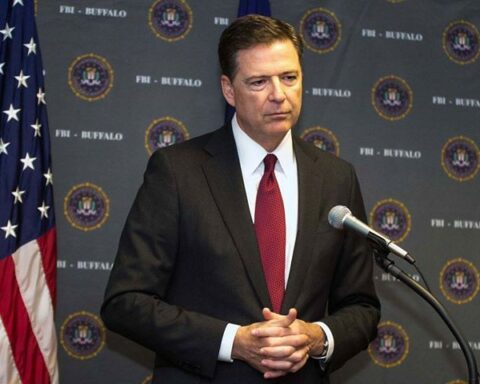

Sen. Ted Cruz is warning Republicans that a disastrous Election Day could cost them eight Senate seats and every statewide race in Texas, raising the possibility of sweeping losses just days before voters head to the polls.
The Texas Republican sounded the alarm Friday as early voting figures fueled his concerns about Democratic enthusiasm.
His warning came as former New Hampshire Gov. Chris Sununu separately predicted that Republican Ken Paxton would lose the Texas Senate race to Democrat James Talarico.
Cruz outlined the potential consequences during an episode of his podcast, “The Verdict with Ted Cruz,” describing a volatile Senate map with several contests too close to call.
“The election is just a few days away, and all across the country there are Senate races that are incredibly close. There are eight to 10 Senate races across the country that are basically tied,” Cruz told listeners.
Ted Cruz: Democrats are showing up and they're energized. If the election were over today, Republicans would lose massively. It would be a bloodbath. pic.twitter.com/DYeTHPJjbD
— FactPost (@factpostnews) October 30, 2026
The senator described dramatically different outcomes depending on which party succeeds in getting its supporters to vote.
“If we have a good night on Election Day, we could have a fantastic result. We could end up with 53 Republicans in the Senate. We could end up growing our majority in the Senate,” he explained.
But the opposite result, Cruz warned, could leave Republicans with just 45 seats. “That big a delta is at play,” he added.
🎓Support Defending Education’s mission to expose political agendas in America’s classrooms and restore quality education for all! 🎓 Help protect students and strengthen education nationwide ➡️➡️➡️ DONATE TODAY!!! 🇺🇸
Cruz, who recently traveled through Georgia, Texas, South Carolina, North Carolina, Michigan and Iowa to campaign for Republican candidates, said early turnout patterns were particularly troubling for his party.
“I’m worried,” he acknowledged. “What we’re seeing across the country is massive Democrat turnout.”
According to Cruz, Democratic voters are motivated by their opposition to President Donald Trump, while reliable Republican supporters have been slower to cast early ballots.
“Democrats are showing up, they’re energized, they hate, hate, hate Donald Trump,” he argued. “If the election were over today, if just the early votes that have been cast so far are counted, Republicans would lose massively.”
Although Cruz believes enough Republican voters remain available to reverse that picture, he cautioned against dismissing the turnout figures as inaccurate polling.
“I can tell you having run a lot of campaigns, having examined a lot of numbers, these data are not fake. The Democrats are massively out-turning out the Republicans. We got to fix that.”
His most striking warning concerned Texas, where he suggested the potential damage could extend far beyond the contest between Paxton and Talarico.
“Texas is excruciatingly close. Understand we could lose Texas,” Cruz declared. “Not just the Senate race. We could lose every single statewide race in Texas. That’s how close these numbers are.”
He appealed directly to Republican supporters to participate, urging them to counter the Democratic turnout advantage.
“Please, please, please show up and vote,” Cruz pleaded.
Sununu offered a similarly pessimistic assessment of the Texas Senate contest during a Thursday appearance on NewsNation’s “Cuomo.”
“I think Texas is in trouble for Republicans,” the former governor told host Chris Cuomo.
Sununu predicted that Talarico would defeat Paxton, a result that would end a decades-long Democratic losing streak in Texas Senate elections. No Democrat has won such a contest in the state since the 1980s.
The former governor’s outlook differed from Cruz’s wider warning, however. While forecasting a Republican defeat in Texas, Sununu remained confident that the GOP could withstand Democratic challenges elsewhere.
He suggested Republicans would retain Senate seats in Maine and Michigan despite competitive polling and argued that reported allegations of ballot stacking involving Democrats in Alaska could benefit the Republican incumbent there.
Sununu attributed some of his confidence to what he considers a persistent weakness in election polling.
“You have conservatives or Republicans that just don’t answer polls. They just don’t come out. So we’re always massively underpolled,” he argued.
He also discounted concerns about Republican contests in South Carolina, Kansas and Iowa.
“The conservative states, it’ll be close. But South Carolina, Kansas, Iowa, they’ll be fine,” Sununu predicted.
Republican National Committee Chair Joe Gruters presented an even more optimistic forecast Friday, identifying Texas as one of several states where he expects GOP candidates to prevail.
Speaking with NewsNation’s Blake Burman, Gruters predicted Republican Senate victories in Maine, Texas, Ohio, Alaska and North Carolina, despite polling that has raised questions about the party’s prospects.
His North Carolina prediction was particularly confident given that election handicapper Decision Desk HQ categorized the race as likely to favor Democrats.
Gruters acknowledged weaknesses in national polling but argued that individual Republican candidates could outperform the broader political environment.
“We put up candidates that can win and common-sense mainstream candidates, and I think that will make the difference,” he stated.
“So yes, maybe the generic ballot, we’re not doing so hot, but when it comes to candidates that are well known and they’re getting their message out, yes, we do have the benefit.”
The conflicting assessments surfaced as Trump’s final campaign schedule underwent another change.
The president had canceled planned appearances in Kansas and Iowa, with the RNC initially pointing to Republicans’ favorable positions in those states as the reason.
Kansas Sen. Roger Marshall defended the canceled visit Thursday, suggesting Trump had more competitive races demanding his attention.
“I think that I’m doing so well in the polls that he’s got, probably got better places to spend his time,” Marshall told reporters.
Trump had been expected to conduct tele-rallies rather than additional in-person appearances in those states. But by Friday, he reversed course, announcing that both Kansas and Iowa rallies would take place in person Sunday.
Gruters described the campaign adjustments as responses to changing electoral information rather than a fixed strategy.
“Listen, all these decisions are being made in real time,” the RNC chair explained.
“I mean, we’re looking at data, looking at where we may need to help certain candidates and people, and so there may be some more changes.”