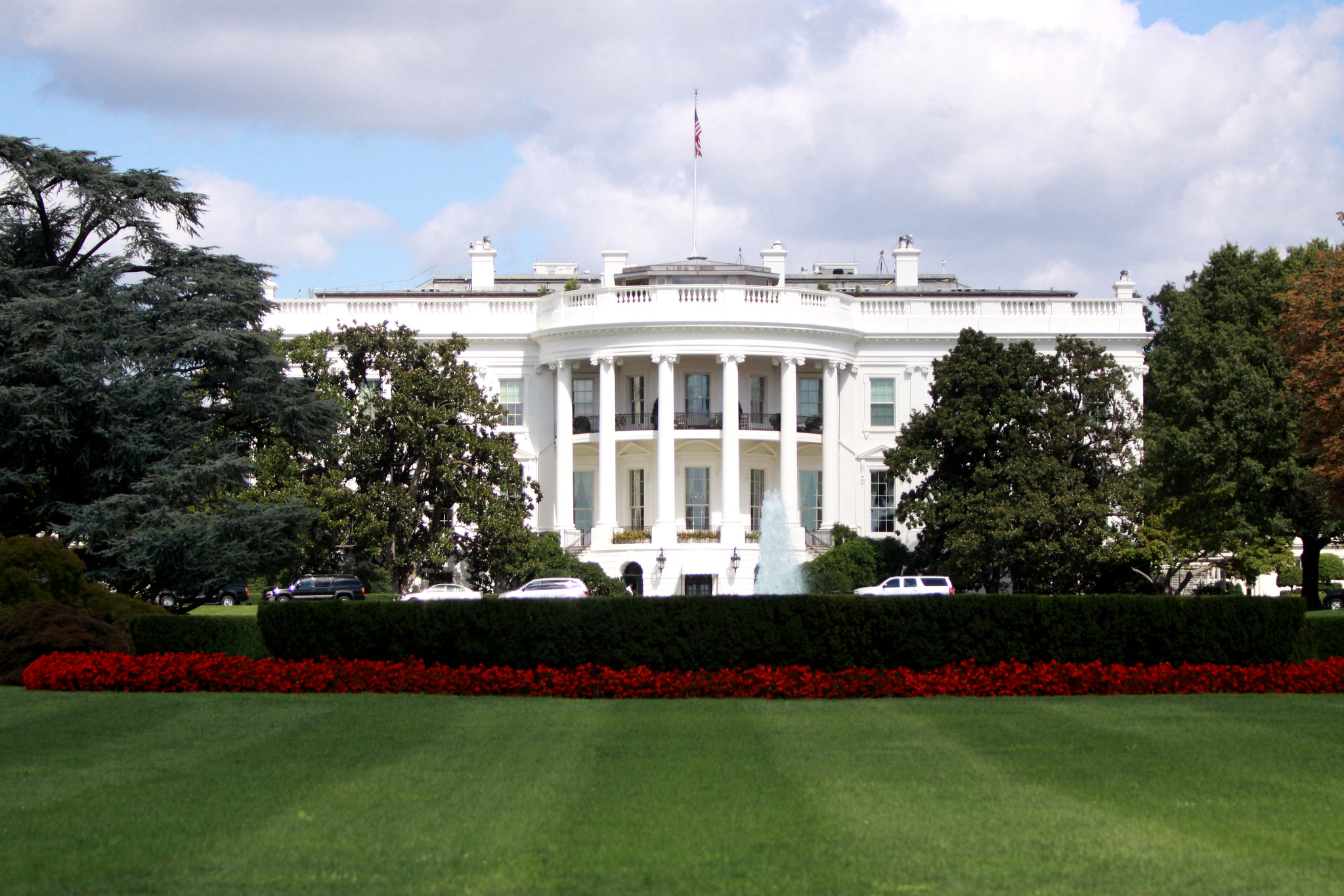
President Donald Trump’s 90,000-square-foot White House ballroom can keep rising for now after Chief Justice John Roberts blocked a construction freeze that threatened to stop most above-ground work on the East Wing project.
Roberts acted Friday through an administrative stay, a temporary Supreme Court order that gives the justices more time to review the administration’s emergency request.
The order does not hand Trump a final legal victory. It does not decide whether the president can build the ballroom without Congress approving it, and it does not end the lawsuit brought by the National Trust for Historic Preservation.
It does, however, keep workers on the job while the court fight continues.
Trump had attacked the National Trust on Truth Social a week before Roberts’ order, after the preservation group won an injunction against most visible construction.
“They are very bad for our Country,” Trump wrote. “They stop many projects that are worthy, and hurt many others.”
He cast the ballroom as a security necessity for the presidency, calling it “vital to our National Security, and the Safety of all Presidents of the United States, both current and future, their families, staff, and Cabinet members.”
Trump also called members of the group “TREASONISTS” for going to court over a project the administration has presented as part of a military complex.
🎓Help millions think clearly and communicate with power through Hillsdale College’s free “Classical Logic and Rhetoric course! 🎓 Expand education for liberty and equip the next generation ➡️➡️➡️ TAKE THE FREE COURSE NOW!!! 🇺🇸🇺🇸🇺🇸
Solicitor General D. John Sauer used similar language in the administration’s filing, describing the ballroom as an “integrated military complex” with a secure event space “vitally required by national security.”
The administration has also argued that the White House needs more protective facilities for the president and other officials if potential attacks occur.
Trump has pushed for quick work on the ballroom after the alleged attempt on his life at the White House Correspondents’ Dinner in April.
The pace of the build is one reason preservationists say the courts had to step in.
In court, the administration put the project at nearly two-thirds finished and said crews were operating 20 hours a day, every day. Private donations totaling about $200 million have reportedly been spent or committed.
The ballroom was first pitched after Trump returned to the White House as a roughly $400 million privately financed project.
Since then, the East Wing has been torn down, the price has reached at least $600 million, and the administration has sought public funding after initially saying private money would cover the full cost.
Trump’s One Big Beautiful Bill Act directed about $352 million in taxpayer money to the project.
The National Trust says Trump cannot demolish parts of the White House and build the massive addition on his own, without congressional authorization and other required reviews.
The group accused the administration of trying to “outrun judicial review” by racing ahead before the courts can decide whether the work is lawful.
U.S. District Judge Richard Leon split the project in two when he issued his injunction. Underground security construction, including bunkers and other national security facilities, could continue. Most work above ground could not.
That ruling was later upheld by the D.C. Circuit in a 2-1 decision that pushed the dispute toward the Supreme Court.
Democratic-appointed Judges Patricia Millett and Bradley Garcia formed the appeals court majority, while Trump-appointed Judge Neomi Rao dissented.
The majority’s most pointed language rejected the idea that national security can automatically override the law.
“While this court accords great weight and deference to invocations of national security and the safety of the President, such arguments are not an automatic get-out-of-law-free card,” the judges wrote.
They also said Congress, not the president alone, gets the final say over whether a ballroom should be added to the White House.
“Whether or not a massive ballroom should be constructed is for Congress to decide and is not a matter for Executive self-help,” the majority wrote.
The judges warned that removing White House property decisions from “the people’s representatives” while damaging the building’s historical and visual architecture “seriously intrude[s] on the public interest.”
They also said the administration’s position “flouts our constitutional order” by suggesting the executive branch could damage “treasured national landmarks” without courts stopping it.
The majority framed the president’s role in the White House as temporary, not possessory.
“Each president is a temporary tenant, not the owner, of the White House and its executive residence,” the judges wrote.
Rao said the courts were the ones crossing the line.
“The district court seized supervision of construction at the White House, and my colleagues affirm this judicial overreach,” Rao wrote.
The appeals court gave the administration a two-week window to seek help from the Supreme Court before its injunction took effect.
Roberts’ stay now preserves the administration’s ability to continue construction while the justices decide how far they want to go.
The Supreme Court could let the lower-court injunction take hold, keep the temporary stay in place as the litigation moves forward or take up the larger question of Trump’s authority over the project.
Friday’s order leaves that central question unanswered.
For now, the ballroom remains under construction, the National Trust’s challenge remains alive, and Trump’s East Wing project keeps moving before Congress has signed off.