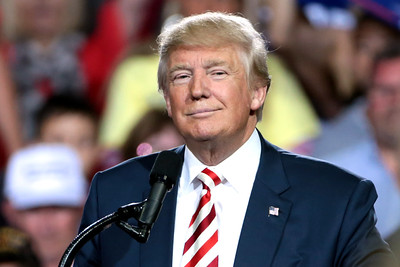
President Donald Trump warned Iran that the next stage of America’s air campaign could move from military targets to power plants and bridges if Tehran does not return to negotiations.
Four days into U.S. strikes on the Islamic regime, Trump told Fox News’s Trey Yingst on Tuesday that the pressure would keep building until Iranian negotiators came back to the table.
“We’re going to hit them very hard tonight, we’re going to hit them very hard tomorrow night, we’re going to hit them very hard the night after, and then next week it gets really bad for them,” he stated.
“Because next week comes the power plants, next week comes the bridges.”
Trump made the threat as U.S. forces expanded their operations around the Strait of Hormuz, the waterway at the center of the fight over regional shipping and energy exports.
Centcom followed Trump’s warning with another strike announcement, identifying “dozens of military targets near the Strait of Hormuz and Iranian coastal areas.”
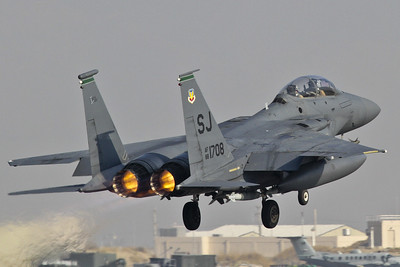
The escalation followed a 4 p.m. EDT restart of the U.S. naval blockade, backed by more than 20 Navy warships and hundreds of American military aircraft.
“American forces remain vigilant, lethal and ready,” Centcom said.
🎇Honor America’s 250th Anniversary!!!🎇 Get your 2026 Heritage Foundation commemorative membership card ➡️➡️➡️ ACTIVATE YOUR MEMBERSHIP NOW!!! 🇺🇸🇺🇸🇺🇸
Trump’s blockade policy had shifted in a matter of hours. On Monday, he announced that the U.S. would be “reimbursed” 20 percent of all cargo shipped through the strait.
By Tuesday, he said he had “decided to replace” that plan with “Trade and Investment Deals that the various Gulf States will be making into the United States.”
“Those Investments will be MASSIVE but, at the same time, extraordinarily good for them, and their future,” he noted.
Trump credited “highly productive conversations with Middle East leadership” for the change and argued that the strait remained open to everyone except Iran-linked traffic.
“We will therefore have a FULL Blockade, but only on Ships coming to and from Iranian ports, or carrying anything have to do with Iranian cargo,” Trump wrote Tuesday.
Speaking with Yingst, Trump also rejected Iran’s claim that exports through the region had been shut down.
“We’re not opening it for Iran,” Trump said. “That’s the only one it’s closed for –– it’s closed for Iran, both in and out, but it’s open now.”
“A lot of things have happened, Trey, in the last few months — pipelines are being built,” he added. “We’re coming up with great alternatives, including Texas, including Alaska.”
Iran had already been accused of striking shipping and U.S.-aligned forces in the region.
The UAE Ministry of Defense said Monday that two United Arab Emirates tankers were targeted with cruise missiles in the strait.
Kuwait’s military said it intercepted one Iranian ballistic missile, five cruise missiles and 33 attack drones. A Kuwaiti Navy vessel was struck and four soldiers were injured.
Centcom cast the seven-hour strike wave as an effort to cripple Iran’s ability to threaten vessels and civilian crews.
“U.S. fighter aircraft, drones, and naval vessels launched precision munitions against Iranian missile and drone sites, naval capabilities, and coastal defense systems during the seven-hour wave to further degrade Iran’s ability to threaten commercial shipping and civilian crews,” Centcom said.
Trump argued that the U.S. had already met the major goals of the campaign, including keeping Iran from obtaining a nuclear weapon, keeping the Strait of Hormuz open and degrading the regime’s military.
The strikes, he said, would “continue until I say that’s enough.”
“If we left right now, it would take them 20 years to rebuild what they have,” Trump remarked.
“The only way you can negotiate with these people is through strength, and the only strength is military strength, and that’s what we’ve done,” he added.
“And, literally, two days ago, we had a deal, and then they broke it at the last moment. They broke it.”
Trump called a strike on oil facilities at Kharg Island “unlikely,” but left himself room to move if he believes Iran has been pushed back far enough.
“As far as taking it is concerned, if we degrade them far enough and deep enough back, I would do that,” he pointed out.
Monday’s targets reportedly stretched across Bushehr, Chah Bahar, Jask, Konarak, Abu Musa and Bandar Abbas.
Tehran signaled it was willing to widen the fight beyond Iran’s coast.
The IRGC claimed U.S. Fifth Fleet-linked facilities in Bahrain had been hit, including command-and-control, logistics, fuel and military equipment sites.
Bahrain and Kuwait were both drawn into the regional exchange, while Jordan said its air defenses shot down three ballistic missiles that crossed into its airspace early Wednesday.
Iranian state media also reported a drone strike on a Jordanian base that hosts American warplanes.
The IRGC’s threat went beyond the immediate attacks. If Washington tried to control maritime routes and block regional oil and gas exports, the group warned, export routes serving the U.S. and its allies could be closed too. Regional energy exports would be “for everyone or for no one.”
Trump’s pressure campaign also included “Pickaxe Mountain,” the site near Iran’s Natanz uranium enrichment facility in the Zagros Mountains that he suggested Monday the U.S. could hit.
Experts believe the facility’s depth means America’s most powerful bunker-buster bombs are unlikely to penetrate it.
The war fight spilled into the Senate on Tuesday, where Democrats blocked a motion to advance the $1.15 trillion annual defense authorization bill in a 50-46 vote that needed 60 to move forward.
Democrats pointed to the renewed conflict and Trump’s failure to seek congressional authorization for a war that began Feb. 28, even though the bill had cleared the Senate Armed Services Committee on June 11 with bipartisan support.
“Now the White House has formally notified Congress that hostilities have resumed, that American strikes are under way again and our forces remain positioned for more. Yet Republicans want the Senate to take up the NDAA, the defense bill, as though none of this is happening,” Senate Democratic Leader Chuck Schumer commented ahead of the vote.