

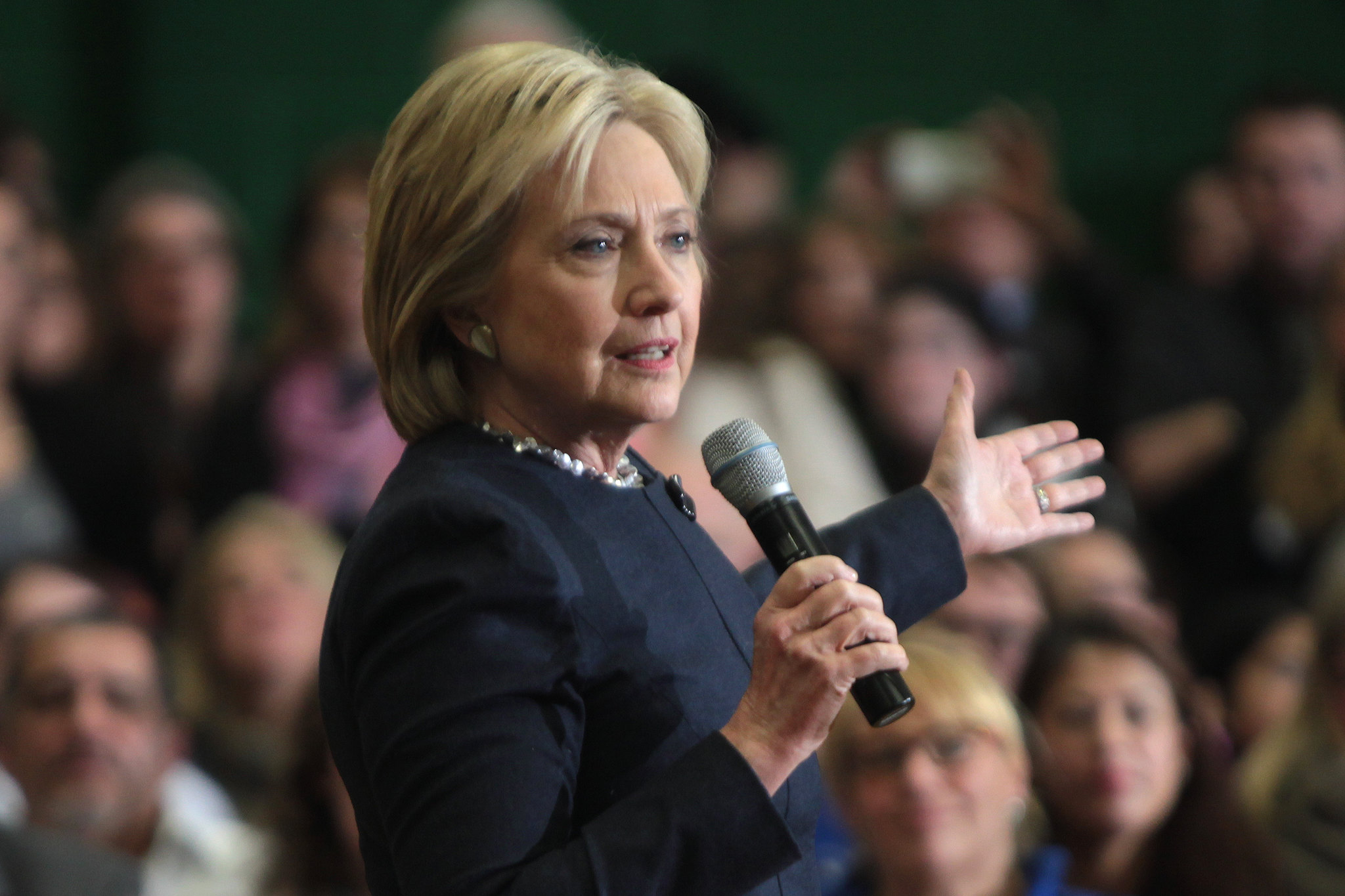
Hillary Clinton conceded that migration “went too far” and called for secure borders in while speaking at an international event over the weekend.
The former secretary of state made the remarks during a panel at the Munich Security Conference titled, “The West-West Divide: What Remains of Common Values.”
“There is a legitimate reason to have a debate about things like migration,” Clinton said.
“It went too far, it’s been disruptive and destabilizing, and it needs to be fixed in a humane way with secure borders that don’t torture and kill people and how we’re going to have a strong family structure because it is at the base of civilization.”
JUST IN – Hillary Clinton admits illegal immigration went too far.
“It went too far, it’s been disruptive and destabilizing.”
Are you saying Joe Biden shouldn't have opened the border and let 10+ million illegal immigrants in?pic.twitter.com/91qDIkAEWs
— KanekoaTheGreat (@KanekoaTheGreat) February 14, 2026
Her comments signaled a tougher posture compared with past Democratic rhetoric that often centered on humanitarian relief and expanded access.
Clinton also criticized current deportation efforts, calling them “bullying” and “very shameful.”
“This debate that’s going on is driven by an effort to control people. To control who we are, how we look, who we love, and I think we need to call it was it is,” she continued.
Clinton acknowledged that physical barriers can be appropriate in certain areas, though she was against erecting a border wall during her 2016 presidential campaign.
During that race, she backed former President Barack Obama’s executive actions that deferred immigration enforcement against millions of children and parents in the country illegally.
🚨 HOLY CRAP! A Czech politician CALLED OUT Hillary Clinton to her face over her Trump derangement syndrome
And Hillary absolutely LOST it
Looks like he struck a nerve! 🤣🔥 pic.twitter.com/HbTMr7GZ0V
— Nick Sortor (@nicksortor) February 15, 2026
She also supported ending family detention and expanding the Affordable Care Act to families regardless of immigration status, stating her goal was to “expand access to affordable health care to all families … regardless of immigration status.”
In 2018, Clinton blasted President Donald Trump’s deportation policies.
“It is now the official policy of the US government — a nation of immigrants — to separate children from their families. That is an absolute disgrace. #FamiliesBelongTogether,” she wrote on X.
“It’s one of the most shameful moments in our history,” she said that same year.
Her remarks in Munich unfolded against a broader debate in Europe and the United States over national sovereignty and migration levels.
Radosław Sikorski, Poland’s foreign minister, told the audience that mass migration “was for decades, supported by Republican businessmen who wanted cheap labor from Latin America.”
He added that mass migration “is not inherently a left-wing or right-wing idea.”
Clinton defended progressive ideals during the session and framed the immigration dispute as part of a deeper ideological clash.
“I understand conservative impulses. I understand we [progressives] are fighting an ideological battle that is as old as time,” she commented.
“There are those of us who are more comfortable in a more open [borderless], tolerant world, and there are those who have their concerns about it because they worry about the impact on existing institutions like the family, community and others.”
She described the expansion of civil rights as a core achievement of modern liberalism.
“It is for me, a blessing that freedom was expanded to include — in the United States, for example — the right of black people to be treated at least better than they had been for 400 or so years. It was a culmination of freedom for women to be given their rights much more fully than they had been,” Clinton went on.
Failed presidential candidate Hillary Clinton smears Republicans on the world stage — suggesting they are intolerant.
"There are those of us who are more comfortable in a more open, tolerant world." pic.twitter.com/YpIsTiQ2ol
— RNC Research (@RNCResearch) February 14, 2026
“It was, I think, a dramatic recognition of dignity for gay people to be able to be treated without fear and even marry, which, to me, is creating a family.”
Her appearance came as Secretary of State Marco Rubio delivered his own warning about border policy and Western identity.
Rubio rejected the idea of a “world without borders” and warned European leaders that unchecked migration threatens national sovereignty.
“This was a foolish idea that ignored both human nature, and it ignored the lessons of over 5,000 years of recorded human history. And it has cost us dearly,” Rubio remarked.
He argued that securing borders reflects responsibility rather than exclusion.
“We must also gain control of our national borders, controlling who and how many people enter our countries,” he noted.
“This is not an expression of xenophobia. It is not hate. It is a fundamental act of national sovereignty.”
Rubio cautioned that failing to control migration risks deep consequences.
“Not only is it an abdication of one of our most basic duties owed to our people. It is an urgent threat to the fabric of our societies and the survival of our civilization itself.”
He urged the United States and Europe to rebuild their alliance on firmer footing and resist what he described as decline.
“We in America have no interest in being polite and orderly caretakers of the West’s managed decline,” Rubio continued.
“We do not seek to separate but to revitalize an old friendship and renew the greatest civilization in human history.”
Rubio told attendees that the U.S. wants partners capable of defending themselves.
“We want allies who can defend themselves so that no adversary will ever be tempted to test our collective strength,” he added.
“We want allies who are proud of their culture and of their heritage, who understand that we are heirs to the same great and noble civilization, and who, together with us, are willing and able to defend it.”
He warned against turning Western institutions into vehicles for guilt rather than strength.
“The U.S. seeks an alliance ready to defend our people, to safeguard our interests and to preserve the freedom of action that allows us to shape our own destiny, not one that exists to operate a global welfare state and atone for the purported sins of past generations.”
Rubio reminded the audience that American ties to Europe stretch back centuries and insisted that partnership remains permanent.
“What we have inherited together is something that is unique and distinctive and irreplaceable,” he stated.
“Acting together in this way, we will not just help recover a sane foreign policy. It will restore to us a clear sense of ourselves. It will restore a place in the world,” the Secretary of State concluded.
“And, in so doing, it will rebuke and deter the forces of civilizational erasure that today menace both America and Europe alike.”




She seeded this years ago & did nothing then
Indeed Ms. Clinton. ““It went too far, it’s been disruptive and destabilizing, and it needs to be fixed in a humane way with secure borders that don’t torture and kill people and how we’re going to have a strong family structure because it is at the base of civilization.”
How can it be done in a “humane way” when many cities, counties and even States have gone “rogue & radical” sanctuaries for illegal foreign invaders ?? The Federal government is totally responsible for everything related to immigration; NOT THE STATES. Therefore every state playing the “sanctuary” game MUST be held accountable and punished accordingly. Serious punishments to cover the costs of what the Obama / Biden regime illegally did to the country. Obama and Biden should be in prison right now because they conspired to cause this immigration catastrophe.