

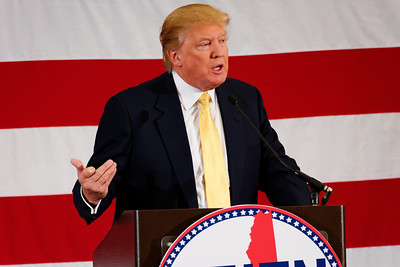
President Donald Trump warned he will impose voter ID by executive order if the Senate stalls the SAVE Act.
“There will be Voter I.D. for the Midterm Elections, whether approved by Congress or not,” he declared.
Trump issued the warning on Truth Social after the House passed the Safeguard American Voter Eligibility America Act in a narrow vote earlier this week.
He framed the fight as central to election integrity and urged Republicans to press the issue ahead of the midterms.
Omg look what Trump just posted:
“There will be voter I.D. for the Midterm Elections, whether approved by Congress or not!”
This is what I voted for. pic.twitter.com/SjGEIuh7l4
— johnny maga (@_johnnymaga) February 13, 2026
“Also, the People of our Country are insisting on Citizenship, and No Mail-In Ballots, with exceptions for Military, Disability, Illness, or Travel,” Trump wrote in the same post.
Thirty minutes later, he floated direct executive action if the Senate refuses to move the bill.
“This is an issue that must be fought, and must be fought, NOW!” Trump wrote.
“If we can’t get it through Congress, there are Legal reasons why this SCAM is not permitted. I will be presenting them shortly, in the form of an Executive Order.”
Trump accused Democrats of blocking reforms and claimed public support is overwhelming.
“Republicans must put this at the top of every speech — It is a CAN’T MISS FOR RE-ELECTION IN THE MIDTERMS, AND BEYOND!” he wrote.
“Even Democrat Voters agree, 85%, that there should be Voter I.D.”
The House approved the SAVE Act in a 218-213 vote. The measure now faces a steep climb in the Senate.
Sen. John Fetterman of Pennsylvania stands as the only Democrat signaling support. Sen. Lisa Murkowski of Alaska has announced opposition from within the GOP.
Only one House Democrat, Rep. Henry Cuellar of Texas, backed the bill. Reps. Ed Case of Hawaii, Jared Golden of Maine, and Marie Gluesenkamp Perez of Washington opposed this version after supporting an earlier draft.
The earlier proposal did not include a voter ID provision tied to mail-in ballots.
The revised bill requires a photocopy of a state-issued ID or an affidavit with the last four digits of a Social Security number for those unable to obtain a copy.
Sen. Mike Lee of Utah has pressed for Senate action and outlined a path forward.
“We’ve got 49 Senate sponsors of the SAVE America Act and at least one more—Senator Collins—who supports it, and that takes us to 50!” Lee wrote on X.
We’ve got 49 Senate sponsors of the SAVE America Act and at least one more—Senator Collins—who supports it, and that takes us to 50!
We now have enough votes to pass a motion to proceed to the House-passed bill—even without any additional votes—with @VP breaking the tie https://t.co/GNuVecxUQW
— Mike Lee (@BasedMikeLee) February 13, 2026
“We now have enough votes to pass a motion to proceed to the House-passed bill—even without any additional votes—with @VP breaking the tie.”
Lee conceded passage is not guaranteed and pushed for procedural muscle.
“I’m getting a lot of questions, ‘What’s next?’ now that we’ve got enough votes to get past a motion to proceed to the House-passed version of the SAVE America Act,” Lee said in a video.
“We’ve got to put all of our efforts, i.e., encourage everyone who will listen to you. The Senate needs to invoke the Talking Filibuster, to enforce the Talking Filibuster.”
He added, “if Senators want to debate this, if they want to Filibuster it, make them work for it.”
What’s next now that we have enough votes to pass the motion to proceed to the House-passed SAVE America Act?
In a nutshell, we now need to convince Senate Republicans to ditch the Zombie Filibuster & enforce the Talking Filibuster on this bill! https://t.co/WsNZfFJUrQ pic.twitter.com/TOiT3gYYuB
— Mike Lee (@BasedMikeLee) February 13, 2026
Senate rules place no time limits on floor speeches, meaning a talking filibuster could stretch for days as senators debate amendments and motions..
Senate Majority Leader John Thune of South Dakota has indicated his caucus will discuss the strategy but has not committed to deploying it.
Thune has warned that a prolonged fight could stall other priorities including housing reform, market structure reform, permitting reform, a highway bill and a farm bill.
Collins signaled conditional support tied to the revised language.
“The law is clear that in this country only American citizens are eligible to vote in federal elections,” Collins told The Maine Wire.
“In addition, having people provide an ID at the polls, just as they have to do before boarding an airplane, checking into a hotel, or buying an alcoholic beverage, is a simple reform that will improve the security of our federal elections and will help give people more confidence in the results.”
Murkowski rejected the bill and warned of timing concerns.
“Election Day is fast approaching,” she wrote on X. “Imposing new federal requirements now, when states are deep into their preparations, would negatively impact election integrity by forcing election officials to scramble to adhere to new policies likely without the necessary resources.”
“Ensuring public trust in our elections is at the core of our democracy, but federal overreach is not how we achieve this,” she added.
Senate Democrats have lined up in opposition and pledged to block the measure.
“Let’s be clear, the SAVE Act is not about securing our elections. It is about suppressing voters. The SAVE Act seeks to disenfranchise millions of American citizens, seize control of our elections, and fan the flames of election skepticism and denialism,” Senate Minority Leader Chuck Schumer of New York said.
Schumer vowed Democrats would stop the legislation in its current form.

It’s about time!
Do it Mr. President.
It’s the last shot at America getting back on course.
God Bless America
Obviously the politicians who are opposing the voter ID mandate want fraudulent voting to continue.
Trump has everything in his favor from the publics support for voter ID to the actual words in the U.S. Constitution. What I would like to know is why aren’t Congress members being held accountable for violating their oath of office where they specifically promise to protect and defend the Constitution. In actuality those words from their oath “protect and defend” mean honoring everything the Constitution includes regarding their service to the American people. This is not an optional thing. They took the job, made a promise and must be held accountable. If they won’t honor their oath they should be expelled from Congress. That is how important the oath is. If a soldier who takes the same oath refuses to honor his/her oath they can be shot. How about we start punishing members of Congress similarly ? Either do your duty or resign or be expelled.