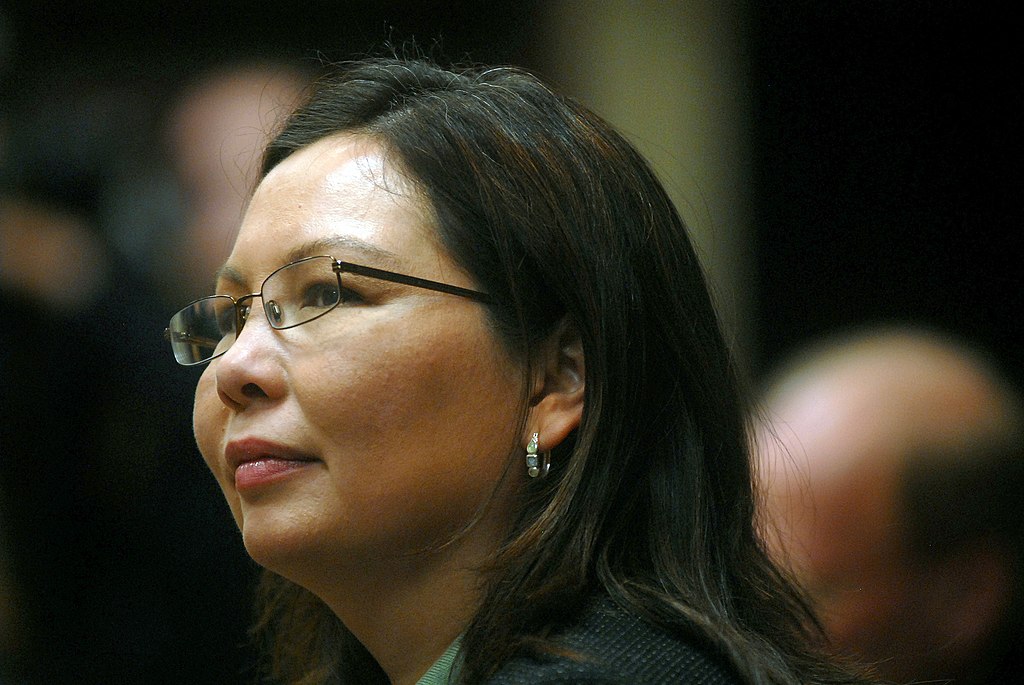
Sen. Tammy Duckworth unloaded on Vice President JD Vance after he mocked her Senate questioning with a “Forrest Gump” jab.
Duckworth, an Iraq War veteran who lost both legs when her Black Hawk helicopter was shot down, rejected the insult outright and framed Vance’s attack as beneath the office he holds.
“Forrest Gump ran toward danger in Vietnam. Your boss ran to his podiatrist crying bone spurs,” Duckworth wrote on X, tying her response directly to President Donald Trump’s Vietnam-era medical deferments.
She followed with a sharper warning aimed at administration priorities, writing, “Petty insults at the expense of people with disabilities won’t change the fact that you’re risking troops’ lives to boost Chevron’s stock price. It’s my job to hold you accountable.”
Forrest Gump ran toward danger in Vietnam. Your boss ran to his podiatrist crying bone spurs.
Petty insults at the expense of people with disabilities won't change the fact that you're risking troops' lives to boost Chevron's stock price.
It's my job to hold you accountable. https://t.co/KTVMtUPLBe
— Tammy Duckworth (@SenDuckworth) January 28, 2026
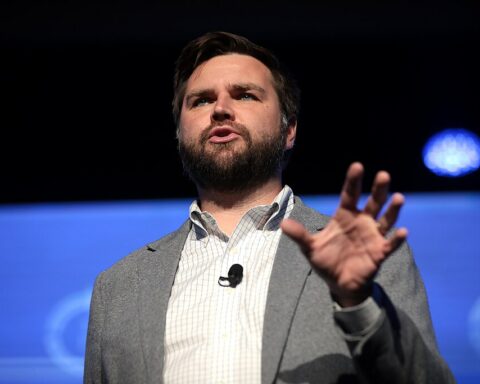
The exchange ignited after Vance posted online that “Watching Tammy Duckworth obsessively interrupt Marco Rubio during this hearing is like watching Forest Gump argue with Isaac Newton,” a comment that quickly drew condemnation from Democrats.
Though Vance did not refer to the film’s infamous military character, Lieutenant Dan, who lost his legs in the Vietnam war, Duckworth clearly assumed the correlation.
Illinois Gov. JB Pritzker stepped in publicly, dismissing Vance’s remark as unserious and out of bounds.
“That’s a U.S. Senator doing her job. This is a random troll tweeting at her,” Pritzker wrote.
That’s a U.S. Senator doing her job.
This is a random troll tweeting at her. https://t.co/YXlddf2XHn
— JB Pritzker (@JBPritzker) January 28, 2026
The Democratic Party of Illinois echoed that defense, framing Duckworth’s aggressive questioning as exactly what voters sent her to Washington to do.
“Illinois voters sent Tammy Duckworth to the U.S. Senate to ask tough questions and demand answers,” the party wrote.
“Sneering at her for doing her job is vile. That kind of contempt says everything about JD Vance.”
The flare-up traced back to a tense Senate Foreign Relations Committee hearing where Duckworth repeatedly challenged Secretary of State Marco Rubio over Venezuela, immigration enforcement, and the legal limits of presidential power.
Rubio appeared before lawmakers as questions swirled around recent maritime strikes tied to drug trafficking and the U.S. role in the capture of Venezuelan leader Nicolas Maduro.
Duckworth pressed Rubio on whether the administration’s posture effectively placed the United States on a wartime footing.
🚨 VENEZUELAN DICTATOR NICOLAS MADURO IN U.S. CUSTODY 🚨 Do you AGREE Trump made America STRONG again??? ➡️➡️➡️ TAKE THE FREEDOM POLL NOW and stand with President Trump!!!🇺🇸🇺🇸🇺🇸
“Mr. Secretary, are we at, are we currently at war with Venezuela?” she asked.
“No, we’re not in a state of war in Venezuela,” Rubio replied.
Duckworth then raised concerns about the Alien Enemies Act, a law historically tied to declared wars, warning that its use carried echoes of past internment abuses.
“Are you really arguing that the president should be able to wield an internment law?” she asked.
WOW 🚨 I have no words…
Mentally deficient Tammy Duckworth tries to pressing Marco Rubio on a "War with Venezuela" but she confuses the Aliens Enemies Act as a war declaration with Venezuela.
This is a MUST WATCH. It's a perfect synopsis of the left vs the right. One side… pic.twitter.com/LquBhIhpuH
— J (@JayTC53) January 28, 2026
President Donald Trump designated Mexican drug cartels, Tren de Aragua, and MS-13 as foreign terrorist organizations after returning to office in January 2025 and later invoked the Alien Enemies Act to accelerate deportations tied to Tren de Aragua.
As Duckworth continued pressing, Rubio defended the administration’s approach by framing transnational gangs as active threats rather than conventional criminal groups.
“What the president… was talking about are these gangs and these narco-trafficking groups that are waging war on the United States,” Rubio said, arguing that organizations like Tren de Aragua operate as hostile forces, not street-level offenders.
The exchange escalated as Duckworth accused the administration of abusive tactics.
“Who did we torture?” she asked.
“We haven’t tortured anybody,” Rubio responded. “We’ve arrested people that are members of gangs, and we’ve deported them.”
Duckworth countered that some deportees were legally allowed to remain in the country and questioned whether Rubio would urge Trump to roll back the Alien Enemies Act.
Rubio deflected the legal question toward the Justice Department while reiterating that the administration views cartel-linked groups as a grave danger to U.S. security.
“Anyone who believes that gangs that flood our country with fentanyl or cocaine are not threats to the United States is not living in reality and certainly does not reflect the opinion of most Americans,” he argued.
The confrontation widened when Duckworth suggested Trump was prepared to deploy U.S. troops into Venezuela.
“The president has already said that he was ready to put American troops in Venezuela,” she claimed.
Rubio pushed back, stating that the president retains defensive authority without signaling an active plan.
“No, I think the president said that he retains the right as commander in chief to protect the United States against any imminent threats,” Rubio said, adding that military involvement in Venezuela was not anticipated.
“I worry that you’re playing fast and loose with our nation,” Duckworth warned, cautioning against another prolonged conflict.
Rubio answered that every president holds the same defensive powers and insisted the administration does not expect escalation.
“We’re not trending in that direction. That’s a fact,” he told her.
Tensions later spilled into a separate clash during the hearing when Rubio sparred with Sen. Rand Paul over whether the Maduro operation amounted to an act of war.
Paul posed a hypothetical scenario involving the capture of a U.S. president, arguing such an act would trigger war.
Rubio rejected the comparison, characterizing the Maduro operation as a limited law enforcement action targeting an indicted figure rather than a sovereign leader.
Paul disagreed, warning that redefining such actions could invite retaliation under similar logic.
Rubio maintained that the United States would always prioritize national interest and self-protection, brushing aside the equivalency argument.
The secretary also used prepared remarks to point out that the administration is not positioning for war in Venezuela and has no troops deployed beyond embassy security.
“There is no war against Venezuela, and we did not occupy a country,” Rubio stated. “This was an operation to aid law enforcement.”
He acknowledged that military force remains an option only under extreme circumstances, such as an imminent external threat, but stressed that no such scenario is expected.
Watch Rubio’s full Senate hearing here: