

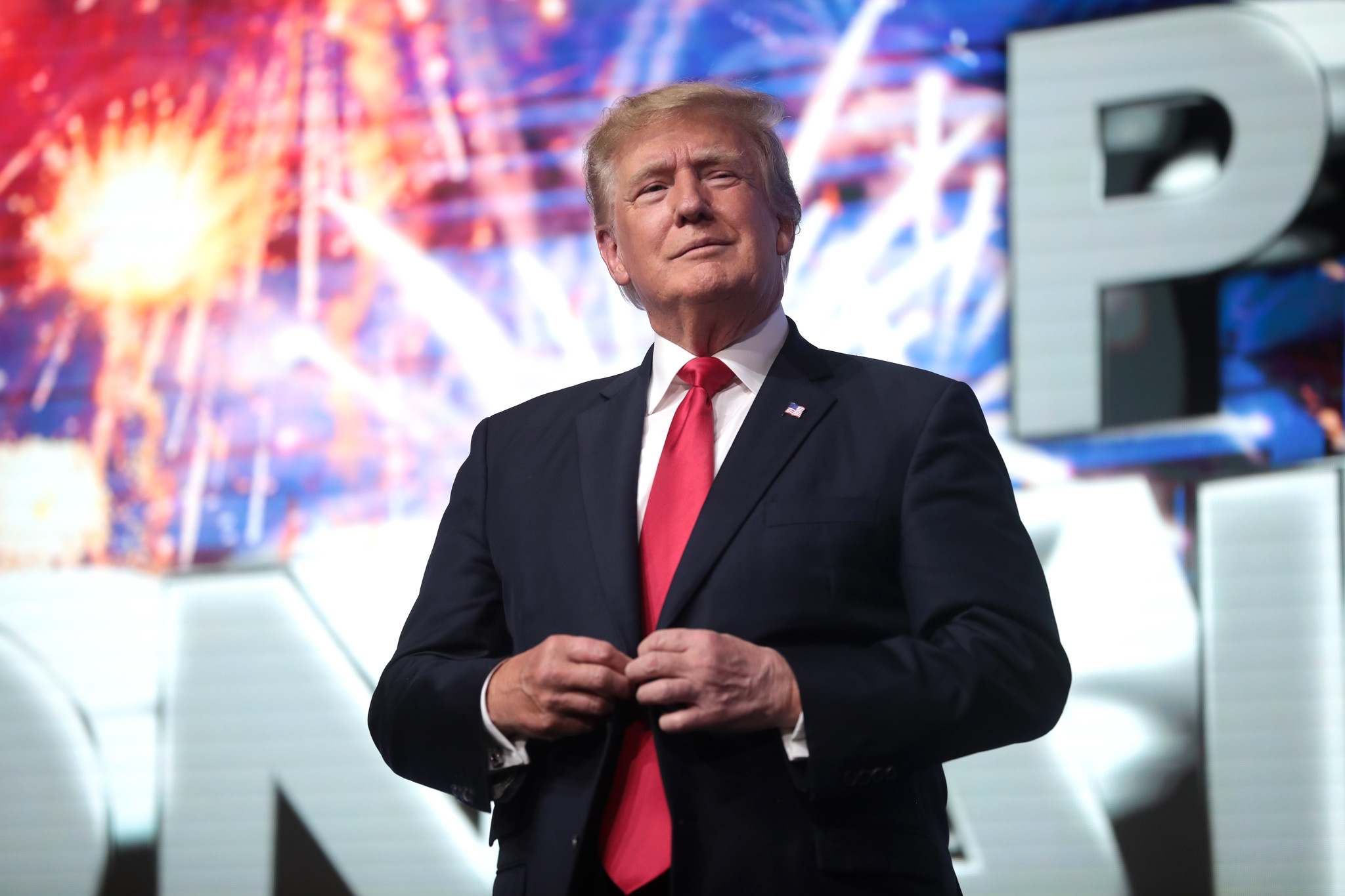
President Donald Trump moved Tuesday to rein in large Wall Street-backed investors buying single-family homes, signing an executive order that directs federal agencies to curb government support and intensify scrutiny of institutional purchases.
The executive order frames the action as a response to rising home prices and declining access to homeownership, arguing that large investors have reshaped neighborhoods and edged out families seeking to buy starter homes.
“Buying and owning a home has long been considered the pinnacle of the American dream and a way for families to invest and build lifetime wealth,” Trump wrote in the order, while arguing that the path to ownership has narrowed for first-time buyers.
Trump asserted that institutional buyers have increasingly concentrated their purchases in specific communities, creating competition that individual families cannot match.
“At the same time, a growing share of single-family homes, often concentrated in certain communities, have been purchased by large Wall Street investors, crowding out families seeking to buy homes,” he wrote.
The president argued that institutional capital has changed the dynamics of the housing market, writing that “Hardworking young families cannot effectively compete for starter homes with Wall Street firms and their vast resources.”
He added that the result has been a shift in neighborhood control away from residents, writing that “Neighborhoods and communities once controlled by middle-class American families are now run by faraway corporate interests,” followed by the line, “People live in homes, not corporations.”
Under the order, it is the stated policy of the Trump administration that “large institutional investors should not buy single-family homes that could otherwise be purchased by families.”
Multiple federal agencies are instructed to issue guidance within 60 days aimed at preventing federal support from facilitating such purchases.
The directive also calls on the Department of Justice and the Federal Trade Commission to increase antitrust review of large-scale acquisitions of single-family homes by institutional investors.
A White House fact sheet accompanying the order described the action as an effort to “put American families first in the housing market,” while asserting that first-time buyers have been crowded out in many areas.
The Department of Housing and Urban Development is instructed to require landlords participating in federal housing assistance programs to disclose ownership and management structures, a step intended to identify “any involvement of large institutional investors.”
The order includes allowances for “appropriate, narrowly tailored exceptions” for build-to-rent communities that are planned, financed, and constructed specifically as rental developments.
🚨 VENEZUELAN DICTATOR NICOLAS MADURO IN U.S. CUSTODY 🚨 Do you AGREE Trump made America STRONG again??? ➡️➡️➡️ TAKE THE FREEDOM POLL NOW and stand with President Trump!!!🇺🇸🇺🇸🇺🇸
Trump also signaled the policy is meant to extend beyond executive action, directing senior White House officials to draft legislation to permanently codify the restrictions.
In the order, Trump described the move as both economic and moral, writing that the administration “will take decisive action to stop Wall Street from treating America’s neighborhoods like a trading floor and empower American families to own their homes.”
Earlier this month, Trump previewed the move on Truth Social, writing that he was “taking steps” to implement a ban and would urge Congress to act.
“For a very long time, buying and owning a home was considered the pinnacle of the American Dream,” Trump wrote at the time, linking housing costs to inflation and adding that the dream has become “increasingly out of reach for far too many people.”
The policy drew unexpected agreement from California Democratic Gov. Gavin Newsom, who has criticized the role of private equity firms in the state’s housing market.
Newsom described the trend as “shameful,” referring to large investment firms becoming major landlords in California communities.
“The institutional investors that are snatching up homes by the hundreds and thousands at a time,” Newsom said during his final State of the State address.
“These investors are crushing the dream of homeownership and forcing rents too damn high for everybody else.”
Newsom stated that potential responses could include increased oversight, enforcement measures, and changes to state tax policy.
“At the end of the day, it’s just monopoly, monopolistic behavior and strength and accountability, level the playing field for working families,” he continued, adding that he looked forward to working with lawmakers.
The largest companies control roughly 3 percent of the single-family rental market nationally, with higher concentrations in parts of the Sunbelt, according to reports.
The pace of institutional buying has slowed from its peak in 2022 as higher interest rates have increased borrowing costs.
The median price of an existing home reached $409,200 in November, according to the National Association of Realtors, representing a 24 percent increase over the past five years.
Mortgage rates have eased but remain elevated compared to recent history, with the average 30-year fixed rate at 6.16 percent, near its lowest point in 15 months but well above sub-3 percent levels seen in 2021.
Market data from Redfin showed there were 47 percent more home sellers than buyers in December, the largest gap in records dating back to 2013.
Active buyers fell to 1.34 million, the lowest level in Redfin’s data and the weakest showing since April 2020.
“Homebuyers are backing off due to stubbornly high home prices and mortgage rates, layoffs, and mounting economic and political uncertainty,” Redfin stated.
Trump and congressional Republicans have highlighted affordability ahead of the midterms, arguing that inflation has eased and prices have stabilized, even as polling suggests many Americans remain unconvinced.
Trump: “Maybe I have bad public relations people…We are not getting it across. We inherited high numbers, and we brought them way down.” pic.twitter.com/oHCBsBR1Aw
— The Bulwark (@BulwarkOnline) January 20, 2026
Speaking from the White House briefing room on Tuesday to mark one year in office, Trump acknowledged that the administration has struggled to communicate its economic record.
“The numbers that we inherited were way up, and now we brought them, almost all of them, way down, way down,” Trump told reporters.
“I mean… maybe you have bad public relations people, but we’re not getting it across,” he continued, attributing public skepticism to messaging rather than policy outcomes.

Agreed BUT to buy & rebuild for resale?
Discount prices for buyers
Otherwise NO
Or renovate homes from 1900-1940 eras if any