


Trump-aligned Republicans abruptly flipped votes to block a Senate effort limiting the president’s military authority in Venezuela, triggering a dramatic procedural showdown settled by the vice president.
A bid to curb President Donald Trump’s war powers collapsed Wednesday night after Senate Foreign Relations Committee Chairman Jim Risch used a point of order to halt the resolution, arguing U.S. forces are not currently engaged in hostilities in Venezuela.
The maneuver succeeded only after two Republican senators who had broken with Trump days earlier reversed their positions, shifting the balance just enough to derail the measure.
Senators Josh Hawley of Missouri and Todd Young of Indiana, both of whom had voted last week to advance the resolution, changed course following direct engagement with the administration ahead of the final vote.
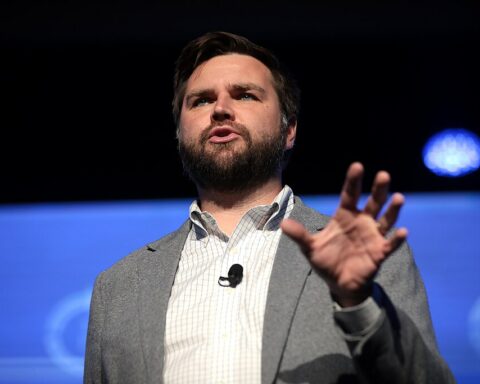
Their reversals left the Senate evenly split and opened the door for Vice President JD Vance to intervene.
Hawley’s move drew particular attention after he acknowledged abandoning his earlier support once he received assurances from Secretary of State Marco Rubio.
Hawley had backed the resolution during a procedural vote the previous Thursday, helping it advance by a 52-47 margin and signaling bipartisan unease over the administration’s actions in Venezuela.
By Wednesday, Hawley indicated he was satisfied after Rubio stated U.S. troops were not operating in Venezuela and pledged that congressional authorization would be sought before any deployment.
Young echoed that reasoning moments before the vote, pointing to what he described as firm commitments from the administration.
“I will not be supporting the Kaine war powers resolution. I have secured from the administration fairly extensive personal assurances related to our future intentions in Venezuela,” Young stated.
Young said he had a letter, which would be made public, that indicated the Trump administration would seek formal authorization from Congress before conducting any military operations in Venezuela.
He added that oversight commitments were also part of the arrangement.
“I’ve secured from Secretary of State Rubio, personally, that he’ll appear before the Foreign Relations Committee [later this month] to discuss this very topic,” Young continued.
“It’s been a real point of emphasis of mine that we need public scrutiny of these sorts of operations and need to involve the public.”
Earlier in the day, Senate Majority Leader John Thune acknowledged uncertainty about whether Republicans could stop the resolution, underscoring how quickly the vote math shifted.
VENEZUELAN DICTATOR NICOLAS MADURO CAPTURED, IN U.S. CUSTODY.
President Trump’s PEACE THROUGH STRENGTH delivered a historic win for freedom, proving our military is SECOND TO NONE and the world still fears American resolve.
Do you AGREE Trump made America STRONG again?
Take the Freedom Poll NOW and stand with President Trump!
The change followed sharp criticism from Trump after last week’s vote, when five Republicans joined Democrats to advance the measure.
Trump publicly targeted Sens. Lisa Murkowski, Susan Collins, Rand Paul, Hawley and Young, accusing them of undermining national security.
“Republicans should be ashamed of the Senators that just voted with Democrats in attempting to take away our Powers to fight and defend the United States of America. Susan Collins, Lisa Murkowski, Rand Paul, Josh Hawley, and Todd Young should never be elected to office again,” Trump wrote on Truth Social.
Trump continued pressing the issue during remarks at the Detroit Economic Club, singling out Young by name.
“And then you have a gentleman from Indiana, Todd Young,” Trump said. “You say, ‘Why are you voting against?’ They can’t give you an answer. They’re unable to give you an answer. It’s like, why are they against the attack on Venezuela? They’re against the attack after they found out. It was the most successful attack, probably.”
Supporters of the resolution argued the absence of active combat did not eliminate Congress’s role in authorizing military action.
Democratic Sen. Tim Kaine maintained that Operation Absolute Resolve, the January 3 operation that resulted in the capture of Venezuelan leader Nicolás Maduro and his wife, remained ongoing.
The bipartisan measure, led by Kaine and Paul, emerged after U.S. Special Forces detained Maduro in an operation the administration described primarily as law enforcement rather than warfare.
“This is not an attack on the Maduro arrest warrant, but it is merely a statement that going forward, US troops should not be used in hostilities in Venezuela without a vote of Congress, as the Constitution requires,” Kaine said last week.
He added that lawmakers rarely regret asserting congressional authority before military escalation.
Republican Sen. Rand Paul argued that internal pressure within the party shaped the administration’s approach, pointing to Sen. Lindsey Graham as a key influence.
“This is Lindsey Graham. Lindsey Graham has gotten to the president,” Paul said, describing a shift in Trump’s posture toward projecting military power across the region.
Graham, for his part, publicly supported expanded military options beyond Venezuela.
Asked whether he would back action against Cuba similar to the Venezuela operation, Graham replied, “Yes.”
Pressed on whether such an option was under consideration, he again answered, “Yes.”
Democratic leaders warned the procedural outcome weakened congressional oversight.
Senate Minority Leader Chuck Schumer accused Republicans of enabling unchecked military engagement.
“Senate Republicans continually fall in line behind Donald Trump, no matter how reckless, no matter how unconstitutional, no matter the potential cost of American lives,” Schumer said.
He continued, “they go along with the President, who is defying what the Constitution requires and is reckless, really, in my judgment.”
Schumer argued the vote created conditions for prolonged involvement abroad.
“What has happened tonight is a roadmap to another endless war, because this Senate, under Republican leadership, failed to assert its legitimate and needed authority,” he said.
Trump, meanwhile, has outlined a longer-term U.S. role in Venezuela following the capture of Maduro.
In an interview published Wednesday, Trump told The New York Times that the United States could be overseeing Venezuela for more than a year.
“Only time will tell” how long U.S. involvement would last, Trump said, adding it would be “much longer” than a single year.
He also announced plans for Venezuela’s interim government to transfer up to 50 million barrels of oil to the United States for immediate sale.
“We will rebuild it in a very profitable way,” Trump said. “We’re going to be using oil, and we’re going to be taking oil. We’re getting oil prices down, and we’re going to be giving money to Venezuela, which they desperately need.”
As the vote unfolded Wednesday evening, Hawley’s and Young’s reversals allowed Risch to raise a point of order against the resolution.
The Senate deadlocked 50-50, setting the stage for Vance’s arrival at the Capitol.
With the chamber evenly divided, Vance cast the deciding vote from the dais.
“On this vote, the yeas are 50, the nays are 50. The Senate being equally divided, the Vice President votes —” Vance said, pausing as he reviewed the paperwork.
“Affirmative. And the point of order is sustained,” he added, chuckling. “I had to make sure.”


Damn DC Swamp at work again & the System wins over MAGA
I voted for Young last election, not the next one.
Swamp ‘republicans, or rats.’ It is the president’s job. Commander-in-chief. What part of that title don’t they understand?