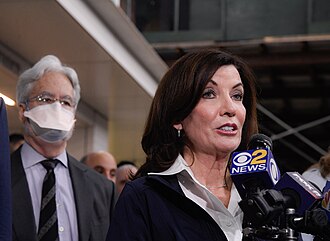

Rep. Marjorie Taylor Greene revealed that President Trump became incensed with her for backing a congressional maneuver that forced the release of long‑guarded government files tied to Jeffrey Epstein.
Greene recounted the tense exchange during an upcoming “60 Minutes” interview, telling CBS News that she and the president openly disagreed on how aggressively Congress should seek access to the documents.
She recalled Trump’s anger, noting that he believed releasing the information could cause damage to individuals connected in various ways to the disgraced financier’s past.
“We did talk about the Epstein files and he was extremely angry at me that I signed the discharge petition to release the files,” she said during the taped interview set to air Sunday. “He was furious with me.”
Greene insisted that victims were pushing for disclosure and that their demands had shaped her position.
“I fully believe those women deserve everything they’re asking. They’re asking for it to come out. They deserve it,” she added.
She said the president strongly objected, warning that the move “was going to hurt people,” a view she said he shared during that conversation.
Trump had initially indicated during his presidential campaign that he supported full transparency surrounding Epstein, but his stance shifted after taking office.
According to Greene, he had urged House Republicans for months not to sign a discharge petition compelling a floor vote.
Even so, several GOP lawmakers broke ranks, with Greene and Rep. Thomas Massie joining the effort.
Once it became clear that more Republicans were preparing to sign, Trump ended up directing Republicans to support a bill requiring the Justice Department to make its Epstein records public.
Lawmakers ultimately cleared the Epstein Files Transparency Act last month, a measure Trump signed, giving the DOJ thirty days to turn over the materials.
The legislative shift came as Congress had already begun releasing portions of Epstein’s estate documents, which included emails mentioning Trump. Both parties had made portions of those records public last month.
Additional revelations fueled political interest Wednesday when Democrats on the House Oversight and Government Reform Committee unveiled a new batch of photos taken inside Epstein’s home in the U.S. Virgin Islands.
The images included chalk markings spelling “power,” alongside a dental suite decorated with masks of men’s faces.
“These new images are a disturbing look into the world of Jeffrey Epstein and his island,” said Rep. Robert Garcia of California, the panel’s top Democrat.
Garcia argued that releasing the visuals served the purpose of ensuring public transparency and assisting investigators in assembling a full account of Epstein’s conduct.
In November, Trump ordered the DOJ to examine Epstein’s past relationships with prominent Democrats, including Bill Clinton and former Treasury Secretary and Harvard President Larry Summers.
Lock Them Up! Russiagate is reigniting…
Obama, Clinton, Comey, and Brennan are all on the hook!
CLICK HERE to demand Russiagate conspirators got to prison!
The Justice Department later said its internal review failed to uncover grounds to charge any uncharged third parties involved in those communications.
Against that backdrop, the working relationship between Greene and the White House has deteriorated substantially.
Greene’s public criticism of the administration, her push for the Epstein files at a time when the president opposed the idea, and her clashes with Trump’s messaging about economic issues contributed to rising tension.
The divide widened further after Greene abruptly announced she would resign from Congress.
Trump publicly supported her departure, calling it “great news for the country,” a statement that signaled how strained their political alliance had become.
Greene rejected suggestions that she stepped aside because Trump discouraged her from launching a Senate run against Democratic Sen. Jon Ossoff.
Instead, she announced that she would exit Congress on January 5, just days after meeting the five‑year service threshold that secures pension eligibility.
In a lengthy statement, Greene accused Washington of operating as a system that mistreats its own voters.
My official statement. pic.twitter.com/x48zEugmPV
— Marjorie Taylor Greene 🇺🇸 (@mtgreenee) November 22, 2025
She argued that Americans were caught between political machines that cycle through elections without delivering improvements for ordinary people.
The Georgia Republican wrote that she would not stay in the role simply to endure what she described as an unhealthy dynamic.
She said she had no intention of playing the part of a “battered wife” in a political system that she believed doesn’t work for voters.
Greene lamented what she saw as a broken culture in Washington, adding that she “never fit in” its institutional structure.
She said she intended to push her agenda outside Congress, arguing that her mission was to challenge policies she viewed as damaging, including environmental proposals, border security decisions, and initiatives related to gender and educational issues.
Her sudden decision drew blowback from several Republicans, who criticized her absence from House votes in the days following her resignation announcement.
Rep. Randy Fine was particularly blunt, saying, “I’m glad she’s leaving. Good riddance.”
He argued that her behavior reflected self‑interest rather than commitment.
Fine added that delaying her official departure prevented the scheduling of a special election to fill her seat, branding the move as “selfish.”
A major legal development further heightened public attention Friday, when U.S. District Judge Rodney Smith granted a Justice Department request to release grand jury documents tied to two prior Epstein investigations.
Smith ruled that the newly signed Epstein files law overrides traditional federal secrecy protections normally governing grand jury material.
The ruling reversed the earlier position taken by another judge, U.S. District Judge Robin Rosenberg, who had said she lacked authority to authorize release based on the government’s earlier arguments.
She had noted that the DOJ had failed to present a sufficient rationale for breaching secrecy rules designed to protect the integrity of grand jury testimony.
Smith’s order did not specify a release date but stated that the legislation Trump signed last month provided legal grounds allowing release of grand jury materials pertaining to the 2005 and 2007 investigations headquartered in West Palm Beach.
Interest in the documents had surged earlier in the summer after controversy erupted around a DOJ memo concluding there was no credible evidence that Epstein had maintained a secret client list.
Legal observers say the materials could shed additional light on Epstein’s crimes and reveal more about people connected to him during the years federal agents were investigating.
The judge’s ruling also came at a moment when Ghislaine Maxwell, Epstein’s longtime confidante, signaled through her lawyers that she intends to file a petition challenging her federal detention.
Should she succeed in her habeas effort, she could seek a new trial.
Her legal team objected strongly to the release of grand jury materials, arguing that public disclosure would severely prejudice her case.
Attorney David Oscar Markus warned that making the records available could undermine her ability to receive a fair trial if a new case were permitted.
Maxwell had previously been convicted for conspiring with Epstein and assisting in the sexual abuse of minors. She is currently serving a 20‑year sentence.