

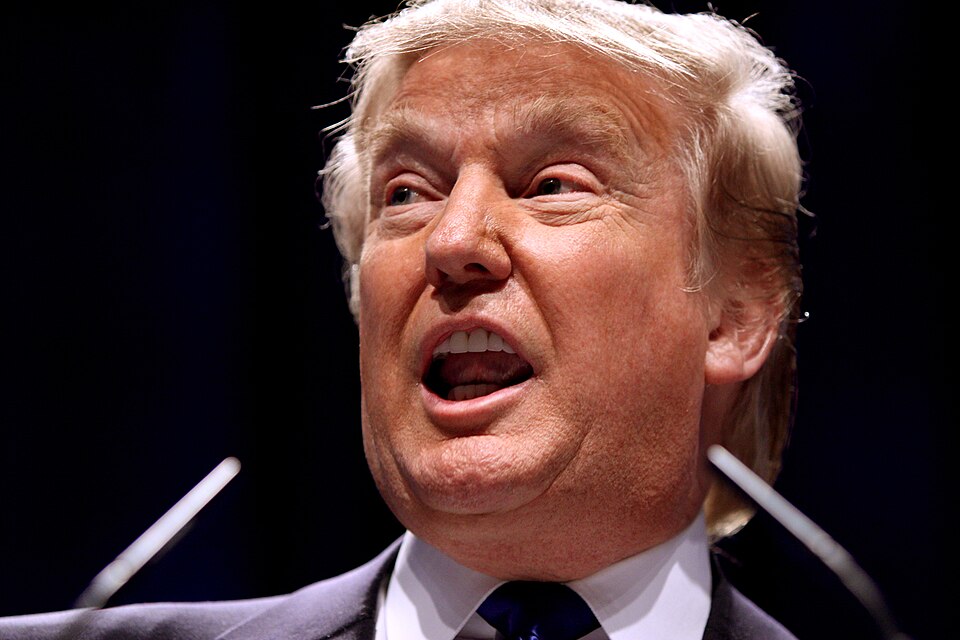
President Donald Trump declared an aggressive expansion of U.S. operations against drug cartels while celebrating the capture of Venezuelan strongman Nicolás Maduro.
Trump told Fox News host Sean Hannity the administration has already choked off maritime drug trafficking and is now turning its attention inland, framing the effort as a life-or-death fight spilling across the southern border.
“We’ve knocked out 97 percent of the drugs coming in by water, and we are going to start now hitting land,” Trump said, casting the next phase as inevitable rather than optional.
He tied the crackdown directly to instability south of the border, arguing criminal networks now wield more power than governments meant to stop them.
“The cartels are running Mexico, it’s very sad to watch, and see what’s happened to that country,” the president noted.
Trump described the toll in stark terms, linking cartel operations to mass death inside the United States. “They’re killing 250,000, 300,000 in our country every single year,” he said.
Trump praised the military planners behind the operation to capture Maduro, describing a daring mission carried out in the heart of enemy territory.
“[Maduro’s] house was in the middle of a fort, with thousands of people and soldiers,” Trump disclosed. “And we went right into the middle of a fort. Who would think you could do that and not lose anybody?”
He credited the mission’s success to preparation and command leadership. “But they had it planned so beautifully, General ‘Razin Caine’ and Pete Hegseth were fantastic,” Trump added.
The president acknowledged the scale of the confrontation, noting foreign forces aligned with Maduro suffered severe losses.
“I don’t even want to say how many, but they got wiped out,” Trump said when asked about Cuban soldiers involved in the operation.
From there, Trump outlined what supporters have dubbed the “Donroe Doctrine,” a hardline vision tying border security to hemispheric control.
“Well, they call it the ‘Donroe,’ I didn’t call it that, but they are calling it the Monroe Doctrine,” Trump said. “And now they call it ‘The Donroe,’ which is basically safety for this part of the world.”
He reduced the doctrine to a straight-forward priority list centered on American security.
“We don’t want drugs pouring into our country,” Trump said. “We don’t want bad people coming into our county, like happened for four years under Biden, who was the disgraced worst president in the history of our country – horrible.”
Trump contrasted his administration’s posture with past leadership, blaming prior presidents for chaos at the border.
“But what Biden did was a step beyond anything that anybody’s ever done,” he noted. “We had millions of people pouring through the border. Now we have nobody coming in unless they come in legally.”
The president argued Maduro’s removal has already begun reshaping power dynamics across the region, particularly in Cuba.
“Cuba totally relies on Venezuela for money and for oil, and they give Venezuela protection,” Trump said when asked whether Havana could survive without Caracas.
Lock Them Up! Russiagate is reigniting…
Obama, Clinton, Comey, and Brennan are all on the hook!
CLICK HERE to demand Russiagate conspirators got to prison!
Trump portrayed post-Maduro Venezuela as cooperative and compliant with U.S. demands. “[Venezuela] They’ve been great. They really have been. I mean, everything we’ve wanted, they’ve given us,” he told Hannity.
Oil emerged as a central pillar of the administration’s leverage strategy, with Trump touting massive economic upside.
He said Venezuelan oil revenues will be routed to benefit both nations, describing the reserves as worth “billions and billions.”
Trump announced immediate next steps, including meetings with top energy executives. “The top 14 companies are coming here,” he revealed. “They’re going to rebuild the entire oil infrastructure.”
The White House agenda also includes outreach to Venezuela’s political opposition. “Well, I understand she’s coming in next week sometime, and I look forward to saying hello to her,” Trump said of opposition leader Maria Corina Machado.
Trump used the interview to send a warning beyond Latin America, turning his attention to unrest in Iran.
“In the past, they’ve started shooting the hell out of people,” he said, describing regime crackdowns on protesters.
He warned retaliation would be swift if violence escalates. “If they do that, we’re going to hit them very hard,” Trump continued. “We can hit them hard. We’re ready to do it.”
In a separate interview with The New York Times, Trump framed foreign intervention decisions as personal rather than bureaucratic.
“Yeah, there is one thing. My own morality. My own mind. It’s the only thing that can stop me,” Trump alleged when asked about limits on power.
He rejected reliance on abstract legal constraints. “I don’t need international law,” Trump stated. “I’m not looking to hurt people.”
Trump also revisited his long-running push to acquire Greenland, calling ownership a strategic necessity.
He pointed out that the territory is “psychologically needed for success,” tying the argument to Arctic resources and security.
“Ownership gives you things and elements that you can’t get from just signing a document,” Trump remarked.
Administration officials have discussed financial incentives aimed at persuading Greenlanders to separate from Denmark, including direct payments.
Trump also addressed rising tensions in Asia, placing responsibility for Taiwan squarely on Beijing’s leader.
Xi Jinping, Trump said, “would have to determine himself” whether to use force.
“I would be very unhappy if he did that and I don’t think he’ll do that,” the president added, projecting deterrence through personal authority.
He contrasted the situation with Venezuela, arguing the underlying conditions are fundamentally different.
“You didn’t have people pouring into China. You didn’t have drugs pouring into China,” Trump noted, rejecting comparisons between the two crises.
Watch Trump’s full interview with Sean Hannity here:
Targeting cartels on land has been necessary from the beginning if we were serious about stopping them rather than making feel good moves which are of no significance. Up until now we’ve never been serious.