

President Donald Trump’s openness to changing marijuana’s federal classification drew an ominous warning from one Republican, who argued that the move risks downplaying serious public health and addiction concerns.
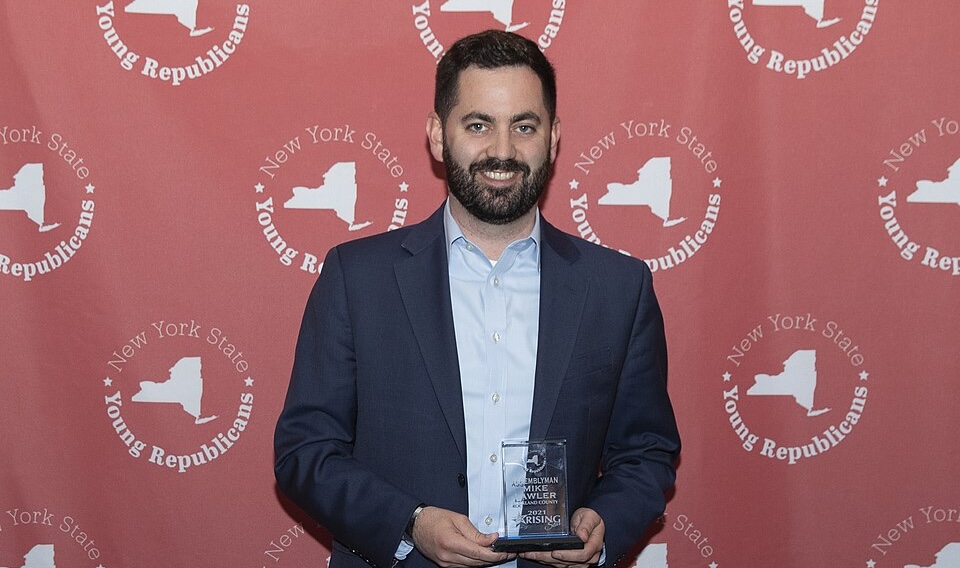
Rep. Mike Lawler of New York said Monday that reclassifying marijuana would be a mistake, pushing back on growing bipartisan pressure to loosen federal restrictions on the drug.
Lawler’s comments came as Trump confirmed his administration is weighing whether to downgrade marijuana’s status under federal law.
“I think rescheduling marijuana is wrong. The fact is, marijuana is a gateway drug. Most of the people who end up using hard substances start out on marijuana,” Lawler commented.
NEW: @RepMikeLawler disagrees with rescheduling marijuana after President Trump said they're looking into it today. ⬇️@thehill @NewsNation pic.twitter.com/oHMAGEqchC
— Blake Burman (@BlakeBurman) December 16, 2025
Trump acknowledged the possibility of reclassification during remarks in the Oval Office, signaling that the White House is actively reviewing the issue amid mounting calls from activists and industry groups.
“We are considering that. Because a lot of people want to see it, the reclassification, because it leads to tremendous amounts of research that can’t be done unless you reclassify. So we are looking at that very strongly,” Trump said when asked about the proposal.
The president’s comments followed reporting that he is expected to sign an executive order directing federal agencies to pursue reclassification.
Marijuana has been listed as a Schedule I substance since 1971, placing it in the same category as heroin, LSD, and methamphetamines.
Under federal definitions, Schedule I drugs are considered to have no accepted medical use and a high potential for abuse.
Trump on the reclassification of Marijuana and the need because of more research $MSOS pic.twitter.com/0L5eo7tynY
— CannaVesting (@Cannavesting) December 15, 2025
Schedule III substances include drugs such as ketamine, anabolic steroids, testosterone, and Tylenol with codeine, which are recognized for medical use but still subject to regulation.
Critics argue that rescheduling would produce only modest changes to criminal justice enforcement while delivering major financial benefits to the rapidly expanding cannabis industry.
Unlike full descheduling, which would remove marijuana entirely from the Controlled Substances Act, rescheduling would still leave federal penalties in place for possession and use.
However, it would significantly reduce regulatory barriers to research and transform the tax landscape for cannabis businesses.
Lock Them Up! Russiagate is reigniting…
Obama, Clinton, Comey, and Brennan are all on the hook!
CLICK HERE to demand Russiagate conspirators got to prison!
Under current tax law, companies that handle Schedule I or Schedule II substances are barred from claiming ordinary business deductions or applying standard credits on their federal tax returns.
Moving marijuana to Schedule III would ease those restrictions and provide a substantial economic boost to the multi-billion-dollar industry.
Democrats have accused Trump of political maneuvering on the issue. Sen. Ron Wyden of Oregon argued that rescheduling could mislead the public into believing marijuana had been legalized nationwide.
“He has not decriminalized cannabis or expunged the records of black and Latino Americans stuck in prison for minor drug offenses. This is just an attempt to boost his pathetic approval ratings,” Wyden tweeted.
Trump will try to gaslight everyone into believing he just made pot legal. Wrong. He has not decriminalized cannabis or expunged the records of black and Latino Americans stuck in prison for minor drug offenses. This is just an attempt to boost his pathetic approval ratings. https://t.co/JvCuhLycxA
— Ron Wyden (@RonWyden) December 12, 2025
Despite ongoing federal restrictions, marijuana policy has shifted dramatically at the state level.
Forty-two states and Washington, D.C., allow medical marijuana, while 24 states permit recreational use.
Lawler pointed to another concern he said is often overlooked in the push for looser rules: the rising potency of modern cannabis.
The concentration of THC, the primary psychoactive compound in marijuana, has increased sharply over the past several decades.
Average THC levels have climbed from about 5 percent in the 1990s to between 15 and 20 percent today, according to data cited by Lawler.
That trend has fueled renewed debate over the drug’s health effects, particularly among young users.
A sweeping new review raised fresh doubts about many of the medical claims surrounding cannabis while flagging significant risks tied to long-term and high-potency use.
“Patients deserve honest conversations about what the science does and doesn’t tell us about medical cannabis,” commented Dr. Michael Hsu, an addiction psychiatrist at UCLA and the study’s lead author.
The findings arrive as more Americans turn to marijuana to manage chronic pain, anxiety, sleep problems, and other health issues.
“While many people turn to cannabis seeking relief, our review highlights significant gaps between public perception and scientific evidence regarding its effectiveness for most medical conditions,” Hsu said.
Hsu and his colleagues reviewed more than 2,500 scientific studies published between January 2010 and September 2025, comparing dispensary-sold cannabis products with pharmaceutical-grade cannabinoids approved by the FDA.
The analysis found clear benefits for a limited number of uses, including chemotherapy-related nausea, appetite loss in HIV and AIDS patients, and certain severe pediatric seizure disorders.
Outside of those areas, the evidence was far weaker. More than half of users reported using cannabis for acute pain, yet researchers found no strong clinical support for its effectiveness.
Existing medical guidelines do not recommend cannabis as a first-line pain treatment.
Research tied to insomnia, anxiety, PTSD, Parkinson’s disease, and rheumatoid arthritis was found to be weak or inconclusive.
The review also highlighted notable risks. Adolescents using high-potency cannabis showed higher rates of psychotic symptoms, with 12.4 percent affected compared to 7.1 percent among users of lower-strength products.
Rates of generalized anxiety disorder were also higher among those using stronger cannabis, with 19.1 percent impacted versus 11.6 percent of peers using lower-potency versions.
Researchers found that roughly 29 percent of medical cannabis users met the criteria for cannabis use disorder.
Daily use, particularly of inhaled or high-potency products, was linked to increased cardiovascular risks, including higher chances of heart attack, stroke, and coronary artery disease.
“When you look at the challenges that we’re facing as a country with substance use disorder, I don’t think rescheduling marijuana is wise. I’m opposed to that,” Lawler said.
🚨 BREAKING: President Trump announces he is signing an executive order to classify Fentanyl as a WEAPON OF MASS DESTRUCTION
“No bomb does what this is doing. 200-300K die every YEAR — that we know of!” pic.twitter.com/LEy69lcqqX
— Nick Sortor (@nicksortor) December 15, 2025
Trump’s comments on marijuana came the same day he escalated his administration’s response to fentanyl, signing an executive order designating the drug as a “weapon of mass destruction.”
The president signed the order during an Oval Office event honoring military members who assisted with border security operations.
“No bomb does what this is doing,” Trump remarked, citing estimates that fentanyl is responsible for between 200,000 and 300,000 deaths each year.
The executive action grants federal agencies expanded authority to target foreign governments, cartels, and organizations involved in the production and trafficking of fentanyl.
Leave Medical Marijuana as IS ONLY
Needed
Yes!! I agree! Maybe he is trying to free the jailbirds to make more room for all the other criminals they are going after??? That is the first thing I thought of.
A great big mistake.